-
What is okki go email verification, and where does it fit in an agent-native prospecting workflow?
-
How does lead generation fit into an agent-native prospecting workflow?
-
What does an okki go workflow for SDR teams look like day to day?
-
Where do teams get lead generation software wrong?
-
How should sales email QA work when an agent writes the first draft?
-
What does waterfall enrichment plus intent data change in practice?
-
What should I ask before buying lead generation software?
I'm a quality and brand compliance manager at a B2B sales tech company. I review every outbound sequence, lead list, and product claim before it reaches customers—roughly 200 items a quarter. Over 4 years of reviewing deliverables, I've rejected about 30% of first deliveries in 2024 because they leaned on unsupported deliverability or reply-rate claims. This FAQ is the version I wish teams got before they bought another lead generation software seat. It covers okki-go email verification, the okki go workflow for SDR teams, sales email QA, and how lead generation fits into an agent-native prospecting workflow.
What is okki go email verification, and where does it fit in an agent-native prospecting workflow?
okki go email verification is the step that checks whether an address is safe to send to before it enters a sales email sequence. In an agent-native prospecting workflow, it isn't a cleanup step you run once a year. The agent runs verification after enrichment, before sequence load, and again when a list goes stale. It can suppress risky domains, flag catch-alls for human review, and route role-based addresses to nurture instead of outbound.
The workflow is agent-native. What I mean is the agent isn't bolted on at the end; it owns the repetitive handoffs between sourcing, enrichment, verification, and sending. No tool can promise inbox placement—anyone who says otherwise is selling you a story. This worked for us, but our situation was a mid-size B2B SaaS team with a clean domain and a tight ICP. Your mileage may vary if you're in a regulated industry or sending from a newly warmed domain.
How does lead generation fit into an agent-native prospecting workflow?
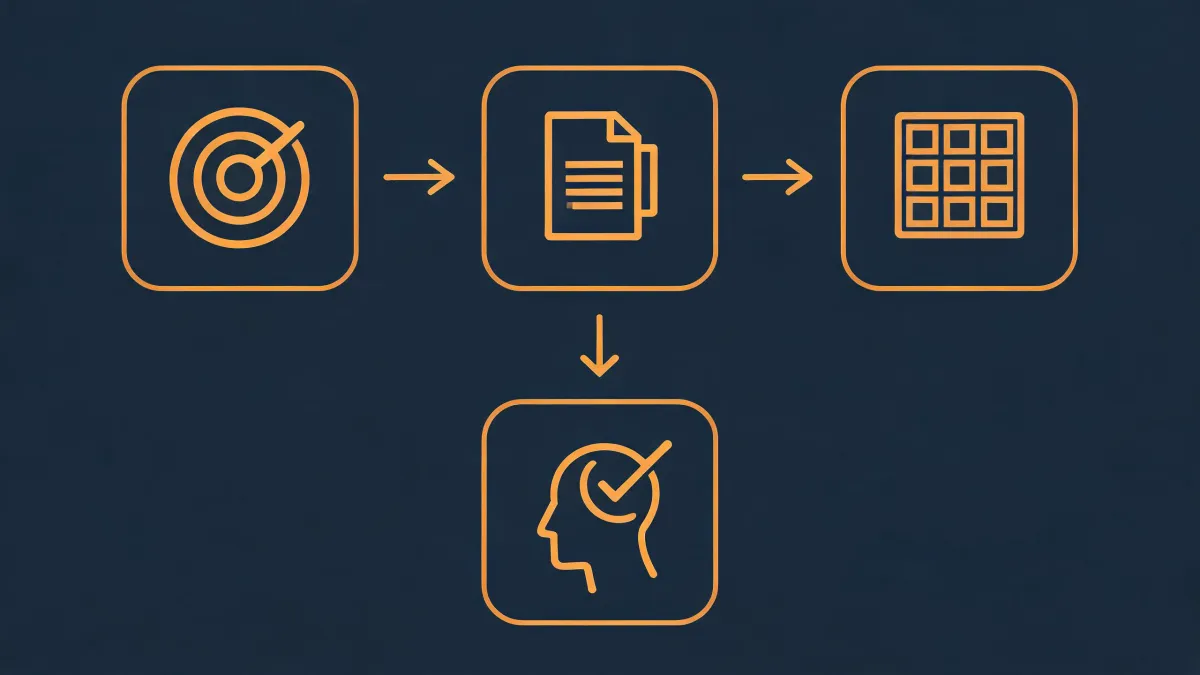
Lead generation is not a separate top-of-funnel stage that ends when a list is exported. In an agent-native prospecting workflow, it's a loop: define ICP, source accounts, enrich contacts, verify emails, score intent, personalize the first line, QA the draft, sync to CRM, and suppress what doesn't fit.
The agent handles the handoffs between those steps. The human still owns judgment: offer fit, account strategy, and relationship moves. If you treat lead generation software as a list vending machine, you'll usually get a bigger pile of the same bad-fit contacts. If you treat it as workflow software, the value shows up in routing and suppression, not just volume.
What does an okki go workflow for SDR teams look like day to day?
On a typical morning, the agent surfaces accounts with new intent signals, verified contacts, and a suggested angle. The SDR reviews the accounts, edits the angle, and approves the sequence. The agent loads the sales email steps, monitors replies, and routes positive responses to the right owner. In the afternoon, the SDR samples QA: bounce rates, complaint signals, personalization quality, and exclusion lists.
The set-and-forget sequence (surprise, surprise) needed weekly QA. The okki go workflow for SDR teams works best when humans stay in the loop at the decision points—who to contact, what claim to make, and when to stop. It doesn't remove the SDR. It removes the tab-switching.
Where do teams get lead generation software wrong?
From the outside, lead generation looks like a volume problem. The reality is it's usually a data-quality and routing problem. Teams buy more contacts before they fix verification, enrichment, and ICP suppression. Then they blame the sales email copy.
I'd rather spend 10 minutes explaining options than deal with mismatched expectations later. An informed buyer asks better questions: How often is the data refreshed? What happens to catch-alls? Can I suppress accounts that closed-lost? Does the system show source provenance? I'm not fully sure why teams keep adding list sources before fixing those basics, but the pattern is consistent in the QA reviews I run.
How should sales email QA work when an agent writes the first draft?
QA should check three things: claim support, personalization truth, and compliance. The agent can draft a sales email quickly, but a human should verify that any performance claim is substantiated and that the personalization isn't hallucinated. Per the FTC's CAN-SPAM Act compliance guide (ftc.gov), as of April 2026, commercial email must include a clear opt-out mechanism, a valid physical postal address, and accurate header and routing information. Deceptive subject lines are still a compliance risk.
FTC advertising guidelines also require claims to be truthful, not misleading, and substantiated (ftc.gov/business-guidance/advertising-marketing). That means no reply-rate promises, no fake case-study numbers, and no 'we saw this work' unless you actually did. The best sales email is usually specific, boring, and easy to verify.
What does waterfall enrichment plus intent data change in practice?
Waterfall enrichment tries multiple data sources before giving up on a record. Intent data helps the agent decide who gets attention first. Together, they change sequencing: high-intent, verified contacts go to a human-reviewed sales email; low-intent or incomplete records go to nurture or get suppressed.
If I remember correctly, our first waterfall test lifted verified reachable contacts by roughly 18%, though I might be misremembering the exact figure. We cut bounce rate, but that wasn't the whole story. (Should mention: we also stopped sending to catch-all domains that hadn't engaged.) The surprise wasn't adding more contacts. It was how much suppressing bad-fit accounts helped. Fewer, better-enriched contacts outperformed another list source.
What should I ask before buying lead generation software?
Ask for the workflow, not the demo. A good lead generation software evaluation should cover:
- How does it verify? Does it explain catch-all and risky-domain handling?
- Can it show source provenance and refresh dates for enriched fields?
- Does it support suppression lists, closed-lost accounts, and regional compliance rules?
- Where does human-in-the-loop review happen before a sales email sends?
- Can I export my data and audit changes?
- How does it handle CAN-SPAM, GDPR, and opt-outs in practice?
If a vendor dodges questions about human review, walk away. If they promise a specific reply rate, ask for the source and the sample size. The right okki-go setup—or any agent-native prospecting workflow—should make your team faster at judgment, not just faster at sending.