ICP framing
Record firmographic, technographic, territory, buyer-role, and exclusion criteria before asking for accounts. This prevents a vague market description from silently becoming an acceptance rule.
Workflow architecture
Agent-native research works best when the brief, evidence standard, and approval boundary are explicit. Lindy AI helps GTM teams structure those decisions inside the agent they already use.
Service overview
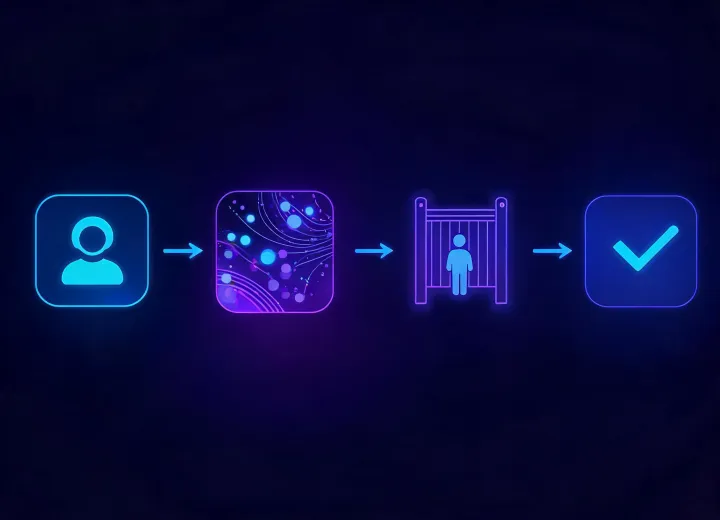
Record firmographic, technographic, territory, buyer-role, and exclusion criteria before asking for accounts. This prevents a vague market description from silently becoming an acceptance rule.
Collect public buying signals such as hiring, leadership change, launches, and stack transitions with retrieval context. Observations and inferences remain visibly different.
Treat role discovery, contact enrichment, and email verification as separate operations. Teams can evaluate provider coverage and freshness without obscuring a waterfall.
Require a human decision before export or outreach. Reviewers check relevance, uncertainty, suppression lists, consent expectations, and applicable regional rules.

Case pattern 01
An SDR manager defines the company segment, geography, trigger, and exclusions. The agent gathers candidate accounts and attaches public evidence. A reviewer removes stale or weak matches before contact discovery begins. The output is not presented as a customer success claim; it is a reproducible operating pattern teams can test with their own controlled sample.

Case pattern 02
A RevOps analyst requests the same fields across a fixed evaluation set. Each provider response is labeled by source, retrieval time, and confidence. Unknown values remain unknown. The team can then compare match quality, cost, and operational fit without inventing universal accuracy, database-size, or deliverability numbers.
Copy the exact command, inspect the package, and start with a narrow prospecting test.
npx -y @okki-global/okki-go-taroball