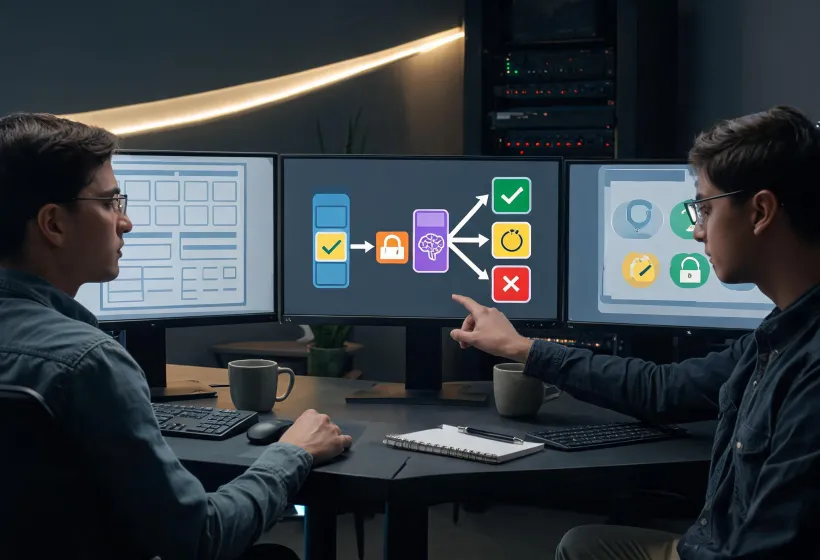
Distributed GTM engineering team reviewing an agent workflow

How we work

A culture of inspectable automation

Lindy AI is framed around a simple operating belief: an agent should make research faster without making judgment invisible.

Mission

Help sales teams turn a clear market question into a traceable first result inside the AI agent they already use. Every useful output should preserve the brief, evidence, uncertainty, and review decision that produced it. This makes agent-native prospecting practical for founders, SDR leaders, RevOps teams, and GTM engineers who need both speed and control.
Vision

Prospecting can become a portable capability rather than another seat-heavy workspace. The desired future is not fully autonomous outreach. It is a composable workflow in which people define intent, agents perform bounded research, and reviewers retain authority over enrichment, export, messaging, and sending.

Culture values

Principles that shape the runtime and the result

Evidence over fluency

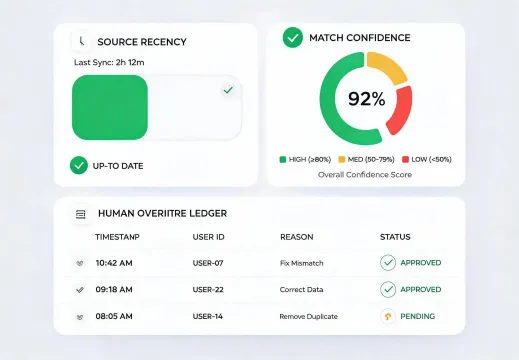
A polished answer is not enough. Source context, retrieval timing, and confidence must be available to the reviewer.

Bounded authority

Research and external action are different permissions. Human approval remains explicit before outreach.

Unknown stays unknown

Missing fields are labeled instead of being filled with plausible but unsupported details.

Reproducible tests

Claims about match quality, cost, or workflow fit should be evaluated against a dated, controlled dataset.

Bring the method into your runtime

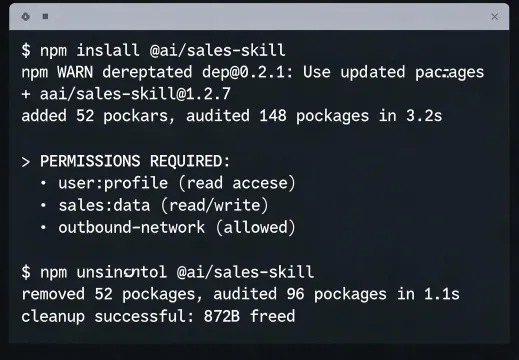
Inspect the installer, configure only the credentials your workflow needs, and begin with a small evidence-backed task. A useful first evaluation records the original brief, accepted and rejected matches, source recency, missing fields, reviewer overrides, and the next action authorized by a person. Those artifacts make later workflow changes easier to compare without pretending one test proves universal accuracy.

npx -y @okki-global/okki-go-taroball