I got into sales ops in 2017. In March 2019, I signed off on an $8,400 prospect data purchase — 37,000 contacts, all looked clean on the surface. Three weeks into the campaign, the bounce rate hit 41%. By the time I added up SDR time on the redo, the warmup infrastructure, and the meetings that never got booked, that mistake cost us roughly $11,200. I still have the post-mortem sheet. I look at it every time I evaluate a new email finder.
So when teams ask me how okki go stacks up as a business email finder against the more traditional DIY stack — usually a data vendor license, a standalone verifier, and a separate sending platform — I try not to hand them a shrug and "it depends."
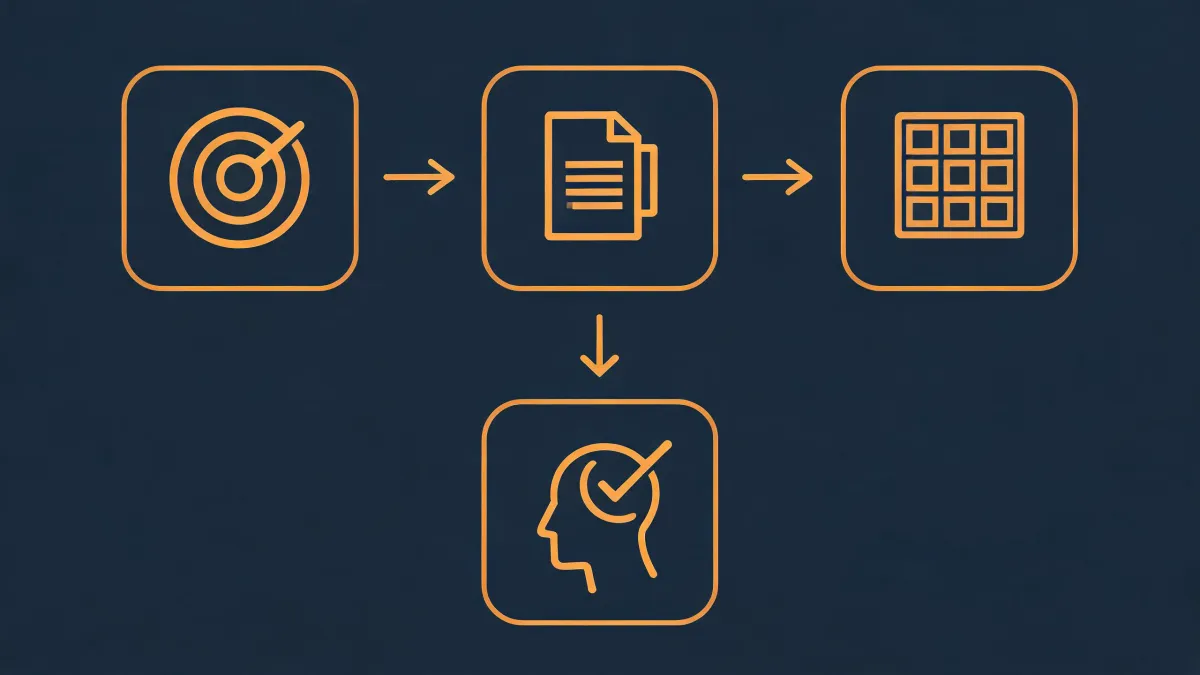
I compare four things, because in my experience almost every other evaluation metric ends up fitting inside one of these four boxes:
- Coverage and email accuracy — with actual names to the mailbox, not "valid format"
- Email deliverability — the real one, not the verification-rate proxy
- AI email writing features — the piece most RevOps teams evaluate wrong
- Total ownership cost — not cost per lead
Here's how the two approaches actually line up.
Dimension 1: Coverage and Email Accuracy
The traditional stack: You license contacts from one vendor, then run them through a second tool to verify. Two tools, two definitions of "valid email," two separate cold quote cycles when something breaks. In September 2022 we paid a vendor $2,300 for a batch the rep called "verified." Fourteen percent still bounced inside our sending platform. Nobody owned that gap because both tools technically did their job.
okki go: Discovery and verification sit in the same workflow. That sounds like a feature, but what it changes is accountability — one source either gets it right or it doesn't. On the waterfall enrichment + intent side, it's also pulling signal from more than one data source rather than betting on a single database's coverage.
My conclusion: "Verified" is a marketing word. What I actually test now is when verification happens — at discovery, at list build, or right before send — and whether the tool will let me run my own 200-record sample before I commit to a thousand-seat contract. If a vendor won't let me test 200 names, I take that as the answer.
Dimension 2: Email Deliverability (Not the Same as Verification)
This is the dimension where most comparisons go sideways, so I want to be blunt about it.
Verification rate and deliverability are not the same number. I've watched a 98%-verified list land 30% of its volume in spam. Deliverability depends on domain reputation, warmup history, send frequency, content triggers, and recipient engagement signal — not on how green the checkmark next to each email is. A verifier can tell you the mailbox exists. It can't tell you whether Gmail is going to trust your sending domain tomorrow morning.
The traditional stack treats this as three separate problems solved by three separate tools. The upside is you can tune each piece. The downside is you spend a chunk of your week tuning each piece, and the feedback loop between "this email bounced" and "why did it bounce" runs through a spreadsheet.
okki go leans on human-in-the-loop outreach — the writing still routes through a person, and the tool keeps the data feed close to the send. Practically, that means when something bounces, the signal moves back into the list instead of dying in a CSV export.
If a vendor guarantees you a deliverability number, that's your signal to walk. I've never seen a real one put a percentage in writing. Deliverability is a moving target owned by the receiving mailbox provider, not by whoever sold you the contact list.
My conclusion: Verification-rate comparisons are mostly theater. What I look for is whether the finder lives inside the sending workflow — because that's where bounce data actually tells you the truth about the list. Verification divorced from sending is a guess with a decimal point.
Dimension 3: AI Email Writing Features — What RevOps Should Actually Evaluate
This one is counterintuitive, so I'll lead with the conclusion.
Most RevOps teams evaluate an AI email writer by reading its output and asking, "Does this sound like a human wrote it?" I'd argue that's the wrong question, and it's the question that cost us a wasted quarter in Q1 2024.
The AI writer is a marketing feature. It is not a funnel feature. It cannot fix a bad contact list, a mis-targeted ICP, or a value proposition your reps don't believe in. We spent three months in early 2024 chasing better email copy while our bounce rate stayed flat and our reply rate didn't move. The copy wasn't the problem.
Here's what I'd evaluate instead, side by side:
- Context injection: Does the writer pull from the actual account record — industry, headcount, recent intent signal — or does it work from a generic prompt and a first name? If it's the latter, the "personalization" is cosmetic.
- Send-rule enforcement: Does it stop you from emailing someone who already replied, opted out, or is inside an active sequence with another rep? This is where a lot of DIY stacks quietly break, and where a data + sending workflow either earns its keep or doesn't.
- Variant discipline: Can it hold an A/B structure without forcing you to manually rewrite the control? Roughly half the AI writers I tested in 2024 couldn't.
- Auditability: Can you see what data the writer was fed for a specific outbound email three weeks ago? If you're in a regulated industry, this one isn't optional.
My conclusion: Stop grading AI writing on prose quality. Grade it on whether it feeds itself the right context and whether it holds your sending rules without being told twice. Prose is the easy part. Context discipline is the part that moves reply rate.
Dimension 4: Total Ownership Cost (Not Cost Per Lead)
Here's the trap I fell into in 2019 and watched dozens of teams fall into since: comparing a bundled tool against a stack by adding up per-unit costs and declaring the cheaper number the winner. That math misses almost everything that actually affects the P&L.
The traditional stack looks clean on a spreadsheet: $0.10 per contact, $0.003 per verification, $99/month for sending, and then a line item nobody quotes you — the SDR hours spent on list building, deduping, and re-importing. When I ran the real numbers on one of our own teams, that hidden SDR time was about 22 hours a month across three reps. At fully loaded cost, that's over $1,800/month that never appeared in any vendor quote.
okki go bundles, so the direct per-contact comparison doesn't exist — which is exactly why the direct comparison is the wrong one to make. What you're paying for in a bundle is the collapse of the handoff. Fewer tools doesn't just mean fewer invoices. It means fewer places where data can go stale between systems, which is where the real cost sits.
My conclusion: The lowest per-lead quote has cost us more in roughly 60% of the sourcing decisions I've reviewed since 2019. Not because the vendor is dishonest — because the quote scope is narrower than the actual scope of work. If you're comparing okki go to a traditional stack on unit price alone, you're comparing a total cost against a partial cost. That's not a fair fight, and it hides the answer you're looking for.
So Which One Should You Actually Pick?
The honest answer depends on your shape, and I can only really speak to the shapes I've lived inside.
Stick with the traditional stack if: you're running very high contact volumes where per-unit savings dominate everything, you already have a sending infrastructure with real history behind it, you have a dedicated ops person who enjoys tuning the pieces, or you're under an existing contract that would be expensive to unwind. Big, mature outbound teams often get more leverage from the modular approach.
Look at okki go if: you're a founder-led or lean SDR team that doesn't have someone whose full-time job is maintaining the stack, you care more about deliverability signal than raw contact count, and you want the writing step to stay human but the data and routing to be agent-native. That's the profile where the bundle earns its price.
And if you're genuinely unsure — run the sample. Ask both paths for the same 200 contacts, the same ICP filter, and send to the same warmed domain for two weeks. Compare bounce, reply, and hours spent by a human. That test will tell you more in 14 days than any feature comparison will.
One caveat I'll own up front: my numbers come from B2B outbound with US-heavy targeting and a fairly steady ICP. If you're sending into a regulated EU market, or you're running PLG-style intent-led outreach rather than cold sequences, the weighting on each dimension shifts and you should redo the math for your own context. The framework holds. The verdict might not.