-
Step 1: Map the workflow before you compare tools
-
Step 2: Treat the company database as a coverage and freshness problem
-
Step 3: Clarify whether okki-go is a skill or a product
-
Step 4: Audit the business email finder with a control sample
-
Step 5: Connect visitor tracking to a trigger, not a report
-
Step 6: Fit bulk email into the agent-native workflow
-
Step 7: Build a TCO spreadsheet before you sign
-
Common mistakes and notes
If you are evaluating okki-go, okki go business email finder, or any tool that promises agent-native prospecting, this checklist is for you. I am a procurement manager at a 70-person outbound agency. I have managed our sales tech budget ($84,000 annually) for six years, negotiated with 20+ vendors, and documented every order in our cost tracking system.
My experience is based on about 22 purchases—maybe 20, I would have to check the system—at mid-market B2B companies. If you are enterprise or pre-revenue, your mileage may differ.
Here is the 7-step checklist I use before adding another seat, credit pack, or bulk email module to our stack. It focuses on total cost of ownership, not list price.
Step 1: Map the workflow before you compare tools
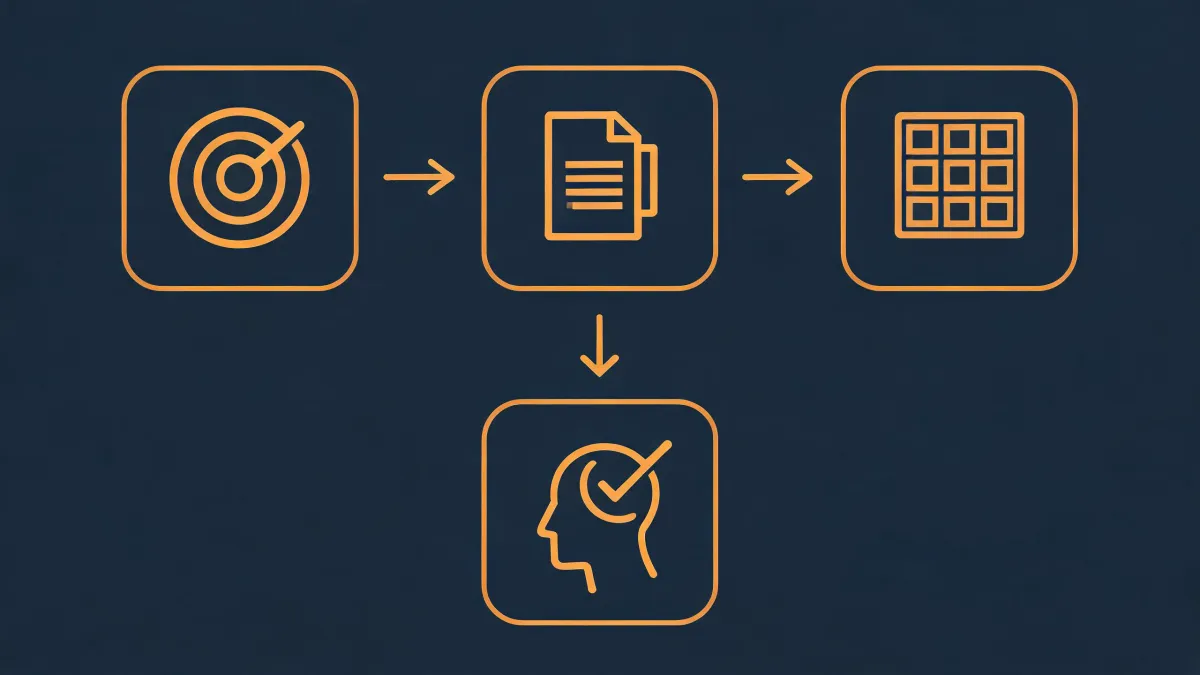
Do not start with okki-go. Start with the workflow. Agent-native prospecting usually has five moving parts: company database, visitor tracking, contact enrichment, intent signals, and outreach execution. Bulk email is one output, not the whole system.
Write down who triggers what, where data enters, where it exits, and who checks quality. If the vendor cannot show you where their tool sits, you are buying a feature, not a workflow.
Checkpoint: You can draw the flow on one page. If not, stop.
Step 2: Treat the company database as a coverage and freshness problem
Company database pricing is tricky. A $99/month plan sounds cheap until you need firmographics, technographics, and buying committees. Check match rate on your actual ICP, not their demo list. Ask how often records are refreshed. What is the credit rule for re-pulling the same account? What happens when a company changes name or domain?
In 2023, I compared 6 lead-gen vendors. Vendor A quoted $9,000. Vendor B quoted $5,400. B added $2,100 for enrichment, $1,800 for verification, and $1,400 for API overages. Total: $10,700. A included everything. That is a 19% difference hidden in fine print. The lowest upfront quote was not the lowest cost.
Step 3: Clarify whether okki-go is a skill or a product
This is where is okki go a sales prospecting skill matters. In an agent-native setup, a skill is an action an agent can call: find company, find work email, check intent, draft sequence, send batch. A product is a dashboard you log into.
Ask the vendor: Does okki-go call a company database? Can it use visitor tracking as a trigger? Does it hand off to a human when confidence is low? If the answer is 'it does everything,' push harder. No tool fully replaces human judgment in prospecting.
If you are buying okki-go as a business email finder, test it separately from the agent. If you are buying it as a skill, test it inside the workflow.
Step 4: Audit the business email finder with a control sample
Do not trust a '100% accurate' claim. No one can promise that. Build a 200-record control sample from your real target accounts. Include known valid emails, role-based emails, catch-all domains, and recently changed jobs.
Measure:
- Valid, verified deliverable
- Catch-all or unknown
- Role-based, like info@ or sales@
- Bounce rate after first send
- Cost per usable contact, not cost per credit
If a tool gives you 1,000 credits for $99 but only 600 are usable, your real cost is $165 per 1,000 usable contacts. Plus the cleanup time. That is the number for your spreadsheet.
Step 5: Connect visitor tracking to a trigger, not a report
Visitor tracking is only useful if it changes what happens next. A dashboard that shows anonymous companies is a report. A trigger that says 'this account visited the pricing page twice, enrich the buying committee, and queue a human-approved email' is a workflow.
Check the privacy side. If you track EU visitors, GDPR consent rules apply. If you track US visitors, CAN-SPAM still governs the email that follows. According to the FTC (ftc.gov), CAN-SPAM requires accurate headers, non-deceptive subject lines, and a clear opt-out. Do not let a tool make compliance someone else's problem.
Step 6: Fit bulk email into the agent-native workflow
This is the step most teams skip. How does bulk email fit into an agent-native prospecting workflow? It fits as a batch action after research, not as a volume blast before research.
The sequence should look like this:
- Agent pulls target accounts from the company database.
- Visitor tracking adds a trigger or intent signal.
- Business email finder enriches contacts.
- Human or policy checks the segment.
- Bulk email sends in controlled batches.
- Reply and bounce data feed back into the database.
I said 'bulk email.' Our SDR lead heard 'blast the list.' The agent-native workflow heard 'batch the qualified accounts.' Result: we sent to 1,200 unverified contacts and had to pause the domain. We were using the same words but meaning different things. Now we define 'bulk' as '500 or fewer, verified, segmented, and human-approved' before any send.
Also watch deliverability. According to Google's Gmail bulk sender guidelines (support.google.com, 2024), bulk senders should keep spam complaint rates below 0.3%. That is not a marketing suggestion. It is a reputation threshold. One bad batch can cost you weeks of sending volume.
Step 7: Build a TCO spreadsheet before you sign
List price is the beginning. Add:
- Seats and minimum credits
- Enrichment and verification overages
- API calls and automation platform costs
- Admin time for list cleaning
- Deliverability monitoring and domain warm-up
- Compliance review
- Training and onboarding
- Switching cost if you leave
In my first year, I made the classic specification error: I assumed 'unlimited' meant the same thing to every vendor. Cost me a $3,200 contract that turned into a $7,000 problem when we had to repair domain reputation after a bad batch. That lesson is why I now require a 90-day TCO model, not a one-page quote.
Common mistakes and notes
Mistake 1: Buying the lowest upfront quote. The lowest quote often has the most hidden fees. Ask for overage rates in writing.
Mistake 2: Treating bulk email as a volume play. Volume without verification and segmentation is how you lose a domain.
Mistake 3: Letting the tool own the workflow. If okki-go or any vendor owns the data model, you cannot switch later without losing history.
Mistake 4: Skipping the control sample. A demo list is not your list. Test with 200 real records before you buy 20,000 credits.
My experience is based on mid-market B2B and agency outbound. If you are in enterprise with strict procurement and security review, your checklist will be longer. If you are a solo founder, you may accept more risk. That is fine. Just know which risks you are accepting.
Bottom line: value over price. A tool that costs 20% more but reduces cleanup, bounce, and admin time can be the cheaper option over a year. Run the TCO. Test the workflow. Keep a human in the loop.