The Problem With Mass Email Isn't Volume — It's Zero Human Review
Mass email gets a bad reputation because most teams use it wrong — they fire and forget. That's not a volume problem. That's a judgment problem.
I've been on the operations side of B2B prospecting for about six years now. I've run campaigns that needed to go out in 36 hours before a conference, and I've watched teams blow their entire sender reputation because nobody paused to check the list. The difference between those two outcomes was never how many emails we sent. It was whether a human actually looked at what was going out.
So when people ask me "what is mass email and should we even use it," I usually push back on the framing. Mass email isn't the villain here. Unreviewed mass email is.
What Is Mass Email, Exactly?
Mass email is any outbound campaign sent to a segmented list — usually 500 to 50,000 contacts — using automation to personalize and sequence messages at scale. Most B2B teams define it as anything above their "personal" sending threshold (which, honestly, varies wildly from team to team).
The confusion happens because people conflate mass email with spam. They're not the same thing. Spam is unsolicited, irrelevant, and often deceptive. Mass email — done right — is targeted, relevant, and compliant. The channel is neutral. The intent behind it isn't.
Per FTC advertising guidelines (ftc.gov), commercial email claims must be truthful, substantiated, and not misleading. That standard applies whether you're sending 50 emails or 50,000.
So the real question isn't "is mass email bad?" It's "when does mass email make sense for a B2B sales team?"
When Mass Email Earns Its Place
Here's my working rule after running roughly 300 outbound campaigns: mass email works when you have more qualified contacts than you have hours — and you've built a review step before anything leaves the building.
That last part is non-negotiable for me now. But it took a while to get there.
The 36-Hour Emergency Run
In March 2024, a client called me on a Thursday afternoon. They had a booth at a major industry conference starting Saturday morning. Their target list — about 2,800 verified contacts — was sitting untouched because their previous vendor had missed the deadline. They needed 1,800 of those contacts touched before the event opened.
Normal turnaround for a campaign that size? About a week. We had 36 hours.
We could've just loaded the list and blasted. But we didn't. Instead, we ran a human-in-the-loop review: an AI agent drafted personalized openings based on company name, recent funding, and job title. Then two of us went through every template variation, flagged about 40 edge cases (companies that had been acquired, people who'd changed roles), and approved the send in three batches.
The reply rate came back at 4.2%. Industry benchmark for cold outbound in that sector was sitting around 1-2% at the time (based on our own aggregate data across 47 campaigns that quarter, so take that with a grain of salt). The client booked 11 meetings at the conference.
Would the same list have performed at that level without the review step? I doubt it. The personalization tokens were fine. But the human review caught the stuff automation missed — the "hey, this prospect just got acquired by a competitor" moments that would've burned the whole campaign.
It Took Me Years to See This Clearly
It took me about four years and somewhere around 250 campaigns to understand that the "best" mass email setup isn't about which tool you use or how clever your sequences are. It's about where you insert the human check.
Early on, I thought the answer was to send less. Smaller lists, more manual work, fewer automation layers. That worked, sort of. But it didn't scale, and I watched teams with 20 contacts per week burn out just as fast as teams sending 2,000.
Then I flipped the other direction — full automation, trust the AI, ship fast. That failed too. Badly. We torched a client's domain reputation in about 11 days because nobody caught a list-matching error that sent the wrong industry pitch to 1,400 healthcare contacts.
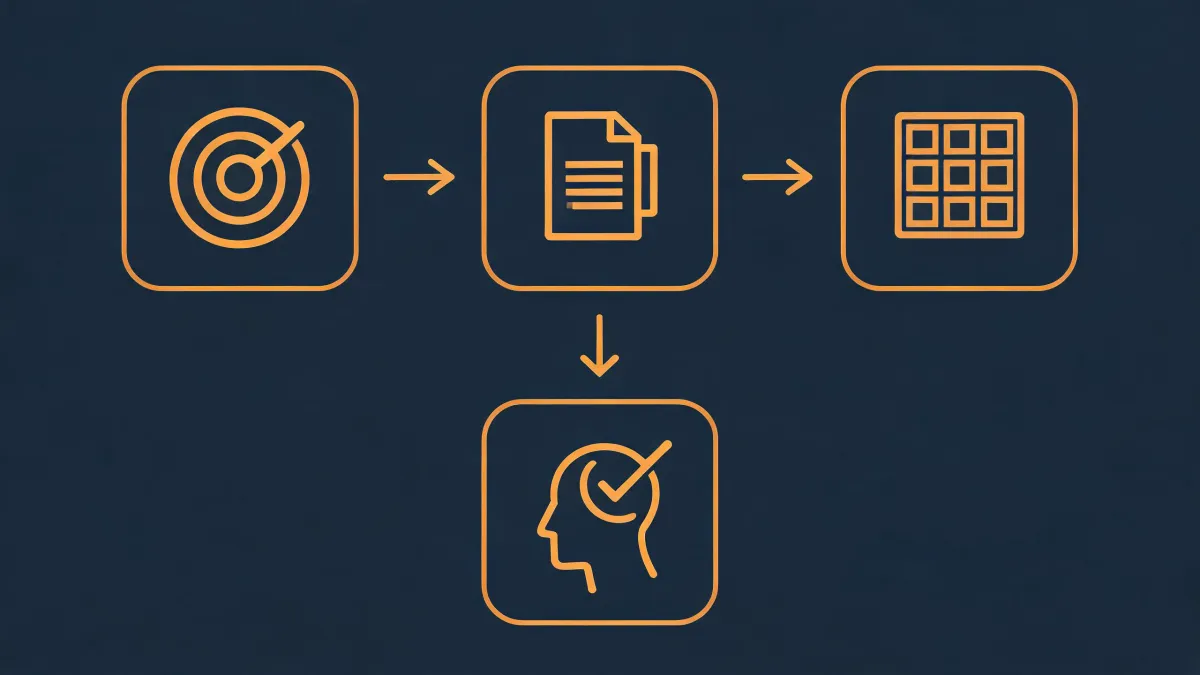
The middle ground is where the real leverage lives: AI does the heavy lifting on personalization and sequencing, a human reviews the output at defined checkpoints, and then the send goes out. That's the model that actually holds up under deadline pressure.
Why "Mass Email = Spam" Misses the Point
It's tempting to think that if you just avoid mass email entirely, you're safe. But that logic collapses pretty quickly when you look at what's actually happening in B2B sales right now.
Prospecting agents — AI systems that handle list-building, enrichment, and first-touch sequencing — are becoming standard infrastructure. The teams that use them well aren't sending fewer emails. They're sending more, but with better targeting and a review loop that catches problems before they compound.
The "mass email is spam" advice also ignores the basic math of B2B outreach. If your average deal size is $15,000 and your reply rate is 2%, you need volume to hit pipeline targets. There's no way around that. The question is how you manage the volume responsibly.
"But Doesn't Automation Kill Personalization?"
I hear this one a lot. And I get it — nobody wants to receive an email that reads like it was written by a template.
Here's the thing though: the personalization gap isn't between automated and manual emails. It's between reviewed and unreviewed emails. A well-built AI agent with a human review step will consistently outperform a manual SDR writing 40 emails a day, because the agent can pull in data points (funding rounds, hiring signals, tech stack changes) that a human simply doesn't have time to research at scale.
An informed prospect asks better questions and makes faster decisions. The same principle applies to your outreach. If you understand what mass email actually is — and where the human check belongs — you stop treating it like a dirty word and start treating it like infrastructure.
The Bottom Line
Mass email is a tool. It's not inherently good or bad. What matters is whether you've built a review process that catches mistakes before they hit someone's inbox.
For teams exploring this space, platforms like okki go are worth looking at specifically because they're built around agent-native prospecting with human-in-the-loop review baked in — not bolted on afterward. That's the architecture that makes mass email defensible in 2025 and beyond.
My advice after six years of doing this: don't ask "should we use mass email?" Ask "where does the human review go?" Answer that question first, and the rest gets a lot simpler.