-
If You’re Building an Agent-Native Prospecting Workflow, Start With the Data Layer
-
How Does API Company Data Fit Into an Agent-Native Prospecting Workflow?
-
My Okki-go Setup Mistake: I Trusted the Demo Data
- The Surprise Wasn’t Deliverability—It Was Schema Drift
-
“But Isn’t This Just Over-Engineering?”
-
What I’d Tell Another Ops Buyer Before an Okki-go Setup
If You’re Building an Agent-Native Prospecting Workflow, Start With the Data Layer
My position is simple: API company data is not an integration detail in an agent-native prospecting workflow. It is the workflow. If the underlying company data is stale, mismapped, or missing consent context, your prospecting agent will not just make a few mistakes. It will scale them politely, consistently, and at volume.
I’m an operations and procurement lead for a 140-person B2B services company. I manage software purchasing—roughly $210,000 annually across 14 vendors—and I report to both RevOps and finance. When we evaluated the okki go ai sales agent in early 2026, I thought I was buying an AI sales agent. What I was actually buying was a data pipeline with a chat interface on top.
How Does API Company Data Fit Into an Agent-Native Prospecting Workflow?
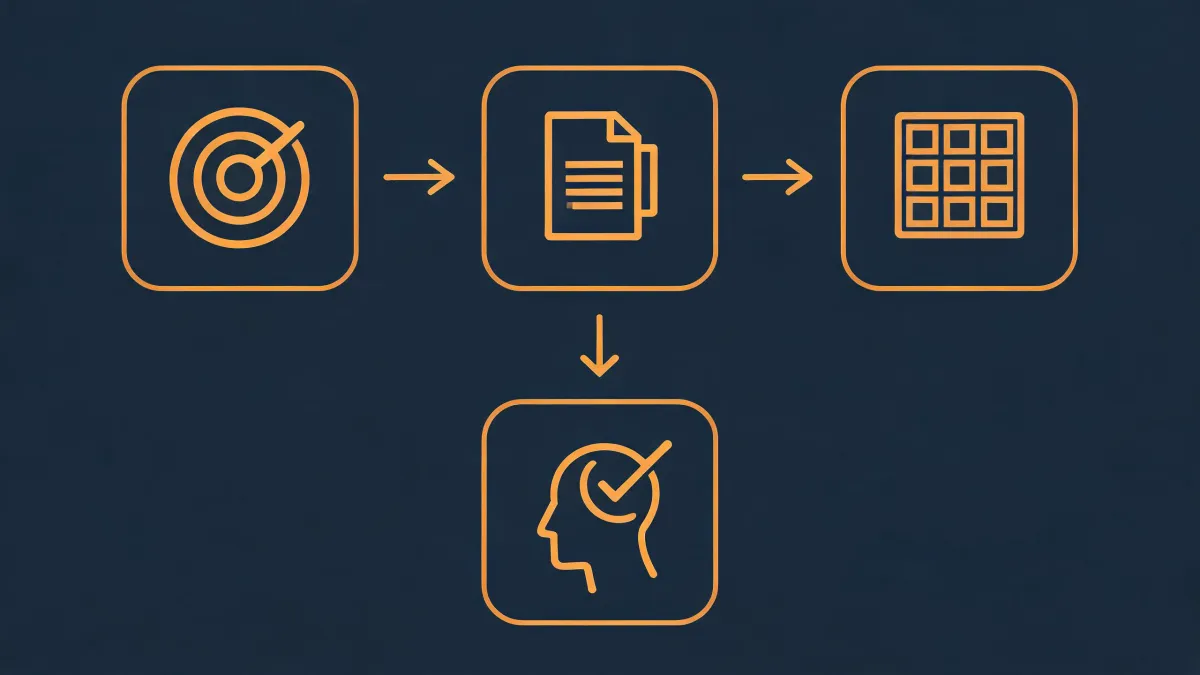
To answer the question directly: API company data sits between your CRM and your prospecting agent. It is the raw material for enrichment, scoring, intent signals, and personalization. In an agent-native prospecting workflow, the sequence usually looks like this:
- Seed: A rep or RevOps defines an ICP segment using CRM fields, firmographics, and exclusion rules.
- Enrich: The prospecting agent calls APIs for company data, contact data, technographics, and intent signals.
- Verify: Email and domain data are checked for syntax, domain health, and basic deliverability risk.
- Score: The agent ranks accounts and contacts based on fit, intent, and timing.
- Draft: Personalized outreach is generated with human-in-the-loop review.
- Sync: Results, suppression lists, and replies are written back to the CRM.
If step 2 is unreliable, steps 3 through 6 become expensive theater. And that is where prevention beats cure. Five minutes of field validation before launch is cheaper than five days of CRM cleanup after launch.
My Okki-go Setup Mistake: I Trusted the Demo Data
I went back and forth between a cheaper enrichment API and Okki-go for about three weeks—or rather, closer to five when you count security review. The cheaper option offered low credit pricing. Okki-go offered waterfall enrichment plus intent data inside the agent workflow. On paper, both could work. My gut said the workflow mattered more than the credit price, because I did not have a data engineering team to babysit a fragile pipeline.
We chose Okki-go. The Okki-go setup was fairly straightforward: connect the CRM, define ICP rules, map fields, configure enrichment sources, and test the AI sales agent on a small cohort. But I made one mistake that I now consider embarrassing. I trusted the demo data.
Demo data is clean. It has consistent company names, valid domains, obvious industry codes, and no duplicate accounts. Our CRM did not. We had three variations of the same company name, two legacy domains, empty employee-count fields, and a few contacts who had opted out in 2023 but were still sitting in an active list.
The Surprise Wasn’t Deliverability—It Was Schema Drift
Never expected the biggest problem to be schema consistency. Turns out agent-native prospecting lives or dies on field mapping. If your CRM says “Annual Revenue” but your enrichment API returns “estimated_revenue_range,” your agent may treat a range like a number. If your intent data provider uses different industry codes than your CRM, your scoring logic may quietly exclude good accounts.
That is not a reason to avoid data enrichment sales automation. It is a reason to treat the API layer like production infrastructure. The good news: most of this is preventable with a pre-flight checklist.
The 12-Point Pre-Flight Check I Now Use
I created this after our third integration cleanup. It is not glamorous. It has saved us an estimated $7,000 in wasted enrichment credits, manual fixes, and one very uncomfortable RevOps meeting.
- Confirm the exact company identifier you will use for matching: domain, CRM ID, or both.
- Map every enrichment field to a CRM field before the first sync.
- Document fallback behavior when an API returns no match.
- Test 100 records manually before scaling to 10,000.
- Check rate limits and retry logic with the vendor’s current API docs as of April 2026.
- Verify consent and lawful basis for outreach in each target region. For EU contacts, GDPR (effective May 25, 2018) makes data minimization and lawful basis practical field requirements, not legal afterthoughts.
- Build suppression lists for opt-outs, competitors, and existing customers.
- Decide which fields require human review before outreach is sent.
- Log enrichment source and timestamp for every record.
- Set a rollback plan if data quality drops below your threshold.
- Assign an owner for CRM hygiene after the pilot.
- Review the workflow weekly for the first month—not quarterly.
To be fair, this sounds like more process than a small team wants. I get why people skip it. But the hidden cost of skipping is not just bad data. It is lost trust from sales, finance, and legal.
“But Isn’t This Just Over-Engineering?”
That is the objection I hear most. “Let the AI sales agent handle it. That’s the point of automation.” I understand the appeal. A prospecting agent can research, enrich, score, and draft faster than any human. But automation does not remove the need for data governance. It amplifies whatever you feed it.
Granted, you do not need a perfect data warehouse before you start. You need a controlled pilot. Start with one ICP segment, one region, and one offer. Run the Okki-go setup with a small list. Review every draft for the first week. Measure reply quality, not just reply volume. Then expand.
Also, be honest about what agent-native prospecting is not. It is not a fully autonomous replacement for SDRs or RevOps. It is a system that needs human-in-the-loop review, especially early on. The teams I have seen succeed treat the agent as a junior analyst with great stamina—not as a magic wand.
What I’d Tell Another Ops Buyer Before an Okki-go Setup
If you are evaluating Okki-go or any AI sales agent, ask this question in the demo: “Show me how your API company data maps to my CRM schema, and what happens when a field is missing.” The answer tells you more than any reply-rate slide.
Looking back, I should have insisted on a schema mapping session before signing. At the time, the vendor’s onboarding looked clean and I did not want to slow down the pilot. That was a mistake—not a disaster, but a mistake.
Prevention over cure is not about fear. It is about respecting your own time. The 12-point check takes maybe two hours. The cleanup after a bad agent-native launch can take weeks. And in B2B sales, a week of misdirected outreach can damage your domain reputation and your brand.
So my position stands: before you scale an agent-native prospecting workflow, validate the API company data. Do it before the first send, not after the first bounce. Okki-go can be part of that workflow. But the workflow only works if the data underneath it is treated like it matters.