I'm the person who approves the purchase, not the one writing sequences every day. As a procurement manager at a 300-person B2B technology company, I've spent six years—or rather, five and a half years of clean, documented spend—tracking sales-stack invoices, rejecting duplicate tools, and explaining why “cheap” decisions weren't cheap once rep time and data cleanup were added to the total.
Here's my position: Too many teams choose another email lookup tool based on email verification accuracy. They should choose Okki Go outbound research based on data coverage. If I am authorizing a pilot, I want to know how much of our ideal customer profile (ICP) can be found at all, not just how correct the addresses are when they happen to be in the database.
Email verification accuracy is a snapshot, not a promise
Email verification matters. It checks syntax, flags role-based addresses, and tests whether a mail server accepts the address. That is useful. But it does not tell you whether the person changed jobs last month, whether a company's firewall treats cold email like spam, or whether the address belongs to the right buyer inside a large team.
I have mixed feelings about accuracy scores on sales data tools. Part of me respects the vendor discipline behind them. The other part has seen too many accuracy claims measured on a clean test set, only to look different on an actual outbound list. That is why I do not buy on accuracy alone. I buy on match rate, refresh behavior, and what the platform does when a verified address is not available.
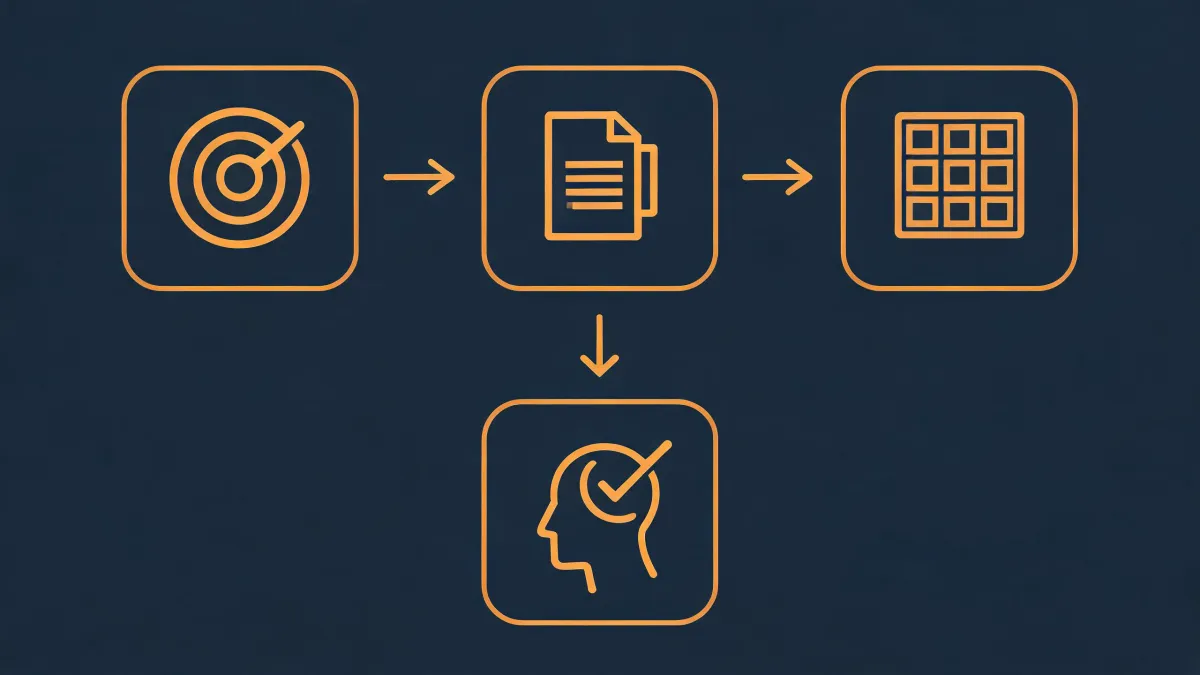
This is where okki-go outbound research changes the buying conversation. Instead of selling me a lookup credit, it explains what happens upstream. Okki-Go uses waterfall enrichment across multiple sources, adds intent as a second layer, and leaves room for a human to decide how to engage. You stop asking, “Which tool has the best accuracy score?” and start asking, “Which platform finds the largest share of our target list?”
Okki Go data coverage was the metric I was missing
Waterfall enrichment sounds technical, so let me explain it like a buyer. In a single-source email lookup tool, you search one database. If there is no record, you get nothing. In a waterfall setup, the platform searches source A, then source B, then source C, each time adding or correcting fields until the record is as complete as it can be. The result is not just more email addresses. It is more complete contact research.
When I evaluated Okki-Go, the surprise was not that one data source looked larger than another. It was how much of a difference waterfall coverage made on a sample of 1,000 contacts from our own CRM. We had been solving “not found” by exporting gaps to two separate tools and hoping a second source would help. Okki-Go folded that into one workflow.
The upside was clear: fewer manual steps, more complete records, and a better conversation about the data behind our outbound. The risk was switching our BDRs to a less familiar platform. I kept asking myself whether broader coverage was worth adoption friction. So I ran a two-week pilot. The biggest cost was training time, not license fees, and the result confirmed my assumption: coverage first, verification second.
Whenever someone sends me a renewal invoice for an email lookup tool, okki go data coverage is now on my total cost of ownership sheet. “Not found” is a cost. Every miss eats an SDR's time. Every manual export creates an error. Every stale sequence step burns a reputation. Once I put an hourly cost next to those misses, Okki-Go looked different from the incumbent because it resolved records instead of returning a blank result.
What is LinkedIn connection and when should a B2B sales team use it?
People often ask me what is LinkedIn connection and when should a B2B sales team use it. It is a fair question now that sales teams have better intent signals but still find contacts with no work email.
A LinkedIn connection is a two-way professional link. It starts as an invitation. Once the prospect accepts, both sides can see updates and send messages without InMail credits. For sales, a connection request is a low-commitment touch, not a replacement for email. It works best when the research before the invitation is specific and human.
Use a LinkedIn connection request when:
- Enrichment returned a strong buyer profile but no valid work email. The invitation becomes your fallback, not your first lazy move.
- Intent data says the account is in motion and the prospect's LinkedIn activity makes them worth contacting. You connect during the signal, not after the pipeline goes quiet.
- You need a follow-up touch that does not add more inbox noise. That only works if the original email or call was context-aware and genuinely useful.
Do not use a connection request when you know nothing about the person. “Hi, I would like to connect” is spam on any platform. Okki-Go's human-in-the-loop outreach philosophy is built for this decision: the platform can show that a contact is relevant, and a person decides whether a LinkedIn invitation is appropriate or whether it would feel intrusive.
Already paying for an email lookup tool? Add these questions to the renewal conversation
“We already have an email lookup tool” is the first pushback I get from revenue leaders. I understand the skepticism. Buying another search box does not fix coverage if it never talks to the rest of the stack.
If you are keeping your lookup tool, test it on the questions below before you sign again:
- What percentage of our declared ICP appears after de-duplication?
- What happens when no address is found? Does the workflow continue, or does the sequence stop?
- Does the product connect verified contacts to intent data, or is it just a search box with a confidence score?
The last question is the one I did not ask early enough. An email lookup tool often validates what it already knows. Okki-Go data coverage is tied to the full research workflow: which accounts to target, which people matter, and which outreach method makes sense when email is not the right first move.
What I would authorize this year
If you gave me a budget to improve outbound prospecting, I would not spend it on another email lookup tool. Not because lookup tools are useless, but because coverage is the foundation and lookup is the finishing move. I would spend it on a platform with waterfall enrichment, intent data, and a clear check for when to use LinkedIn instead of email.
I have made peace with that tradeoff because Okki-Go does not pretend to replace a sales team. Outbound still needs strong SDRs, thoughtful messaging, and patience. Okki-Go simply gives them better raw material—wider coverage, cleaner signals, and fewer dead-end searches. No platform can guarantee deliverability or eliminate every bad address. But teams that stop obsessing over accuracy scores and start asking about okki go data coverage are the ones that will understand their outbound research cost per meeting far better.