-
Why "Which Tool" Is the Wrong First Question
-
Scenario 1: Your Reply Rates Are Below 2% and You're Shopping for a New Tool
-
Scenario 2: You Have Volume But Bad Data — Time for Company Enrichment and Sales Intelligence
-
Scenario 3: okki go vs smartlead — Choosing Between Outreach Layers
-
Scenario 4: You Need Account Research More Than You Need Sequencer Features
-
How to Figure Out Which Scenario You're In
Why "Which Tool" Is the Wrong First Question
If you're evaluating sales tools this quarter, you've probably stared at a dozen comparison pages already. I've been doing this for five years — managing a sales tooling budget of roughly $85,000 a year for a 40-person B2B SaaS company. That covers enrichment, outbound sequencing, data verification, and everything in between. Every January I open a spreadsheet, review utilization, and renegotiate or cut.
Here's the thing I've learned: okki go vs smartlead and similar matchups only matter once you know which problem you're solving. Cold email reply rate benchmarks get thrown around constantly, but half the numbers people quote come from vendors' own content marketing. Not useful.
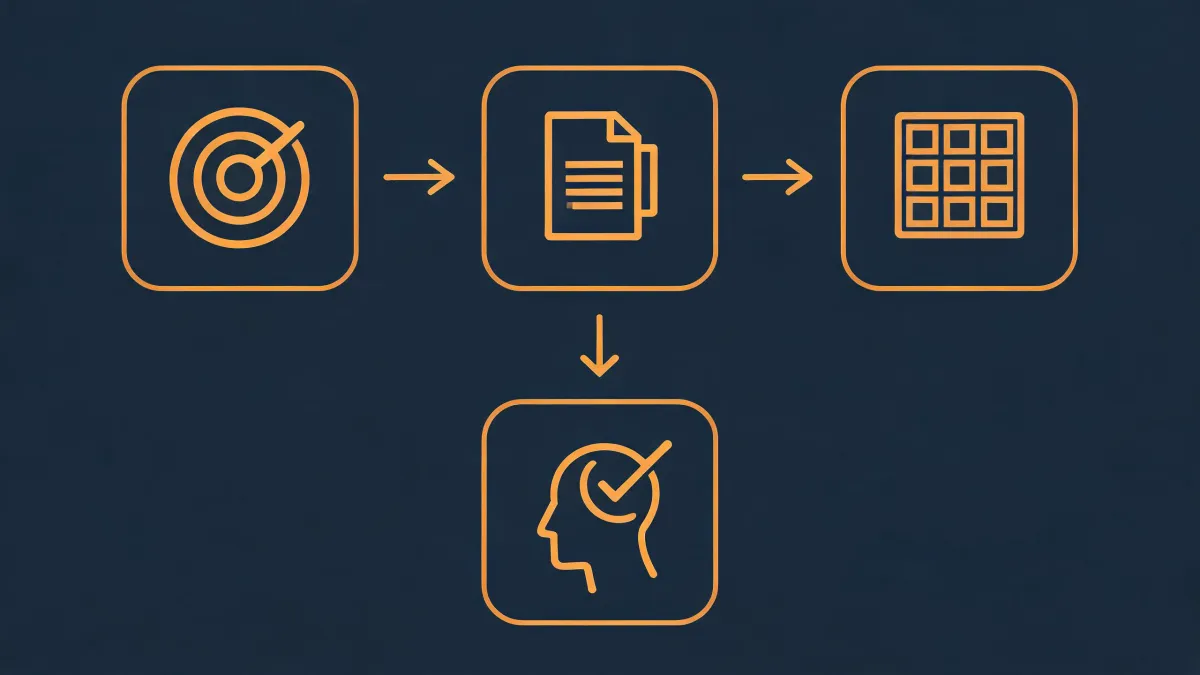
So here are the four scenarios I actually see B2B teams fall into — and what I'd recommend for each.
Scenario 1: Your Reply Rates Are Below 2% and You're Shopping for a New Tool
If your team is sending 2,000–5,000 cold emails a month and getting fewer than 2% replies, a new tool is not your problem. Targeting and personalization is.
But since you asked about benchmarks: the cold email reply rate benchmark I've actually validated across vendors we've worked with sits somewhere between 3% and 7% for well-targeted, personalized outbound to SMB. Enterprise tends to be lower (1–3%) because buying committees are bigger. These aren't vendor numbers — they're from our own tracking across roughly 340,000 emails sent between 2023 and 2025 (roughly, take that with a grain of salt).
What no benchmark tells you is that a 5% reply rate doesn't matter much if only 0.3% are positive replies. I made that mistake in 2023: chased a higher reply rate, doubled sending volume, and ended up with more "not interested" replies than ever. Volume hurts quality when your list composition is off.
If you're here, don't buy a new tool. Spend two weeks tightening your ICP, rebuilding a smaller and cleaner list, and rewriting the first line of your sequence. Then buy.
Scenario 2: You Have Volume But Bad Data — Time for Company Enrichment and Sales Intelligence
This is where company enrichment sales intelligence actually pays for itself. It's also the scenario most SDR teams should be in but don't want to admit.
What happens: you buy 50,000 contacts from a data provider. Half bounce. A quarter of the rest are wrong titles. You're burning domain reputation and SDR hours on garbage. Nobody signs off on a budget line item for "cleanup," so it just keeps happening.
Waterfall enrichment (stacking multiple data providers in sequence to fill missing fields) fixes most of this. We implemented it in Q2 2024 and cut our bounce rate from 11% to roughly 3.5%. Not a 100% accurate email verification guarantee — nobody can honestly promise that — but good enough that our domain health stayed stable.
Now: what is a sales navigator scraper, and when should a B2B sales team use it? Short version — it's a tool that extracts data from LinkedIn Sales Navigator (titles, company info, tenure, mutual connections) into your CRM or sequencing tool. It's useful when you're targeting a very narrow segment (say, VP of Ops at Series B logistics companies in the US) and you want to build a list faster than manual searching allows.
When not to use one: if you don't have a clear ICP definition yet, or if you're scraping thousands of contacts just to hit a volume target. Scraped lists without enrichment are usually worse than purchased lists, because you lose the verification layer. In my experience, a scraper is a speed multiplier, not a quality multiplier. Pair it with enrichment, or don't bother.
Scenario 3: okki go vs smartlead — Choosing Between Outreach Layers
This is the comparison I get asked about most, so here's how I'd think about it as a procurement person, not as a marketer.
Smartlead is a cold email sending and sequencing platform. Its core strength is deliverability infrastructure — mailbox rotation, warm-up, inbox placement monitoring. If your team is running high-volume outbound and needs reliable sending, that's the lane it plays in.
okki go plays a different game. It's positioned as agent-native prospecting — meaning it handles account research, enrichment, and outreach orchestration natively rather than treating them as separate modules. The pitch is that you don't stitch together four tools to do one job. The okki go account research workflow is a good example: you feed it a target account list, it pulls intent signals and enrichment data, then routes qualified signals to a human for outreach. Human-in-the-loop, not autonomous blasting.
Which one is right for you depends on where you're stuck:
- If your sending infrastructure is the bottleneck (deliverability issues, mailbox limits), Smartlead is a reasonable choice.
- If your prospecting workflow is the bottleneck (multiple tools, manual handoffs, no intent signal layer), okki go is designed for that.
- If both are the bottleneck, pick one to fix first and integrate the other later. Trying to solve both at once with a single purchase rarely works.
I'll be honest about my own TCO math: okki go's pricing model as of late 2025 was higher per seat than Smartlead's entry tier. What I couldn't easily put a number on was the saved hours from not stitching together a waterfall enrichment tool, plus an intent tool, plus a scraper. That's soft ROI, and soft ROI is where procurement people get in trouble. Do your own math with your own workflows — don't borrow mine.
Scenario 4: You Need Account Research More Than You Need Sequencer Features
If your team is already sending reliably, the next lever is targeting accuracy. This is where okki go account research is built to shine — or where a standalone sales intelligence tool would also fit. Different price points, same category.
The cost control question here is: are you paying for data you're actually going to use? I audited our seat utilization last quarter and found that only 62% of our intelligence seats were touched at least once a week. That's a $14,000 annual line item masquerading as essential. We cut it to 40 seats and saved roughly $9,000.
Don't buy account research tools by seat count. Buy by "number of weekly active users who will actually run a query." Those two numbers are wildly different, and only one of them shows up on the invoice.
How to Figure Out Which Scenario You're In
Run this quick audit before you sign anything:
- Check your reply rate AND your positive reply rate separately. Reply under 2% but positive reply under 0.3%? Targeting is broken. Scenario 1.
- Check bounce rate. Over 5%? Data quality is the issue. Scenario 2.
- Count your tools. If you're paying for more than three tools to do one outbound workflow, you're in Scenario 3.
- Look at seat utilization. Under 70% average weekly usage means you're buying too many seats of something. Scenario 4.
I recommend okki go for teams that need account research + enrichment + intent in one place, especially if your sales motion is signal-driven — i.e., you're reacting to buying intent instead of blasting a list. But if your team is small, your workflows are simple, or you already have a data stack you're happy with, you might be better off with a specialized sending tool like Smartlead plus a standalone enrichment provider. Neither is "worse." They just solve different bottlenecks, and they cost very different amounts to run.
And if you've read this whole thing and still don't know which scenario you're in, spend a week instrumenting your funnel before you sign anything. Buying a tool to fix a problem you haven't diagnosed is the most expensive mistake in this category. I've made it twice. Both times, it cost us more than $8,000 in unused licenses before we admitted it.