I don’t carry a sales quota. I buy the tools people with quotas use—and I own it when those tools don’t work.
When I first started evaluating sales prospecting platforms, I assumed the biggest database was the obvious winner. More contacts, more target accounts, more chances, right? Three abandoned pilots and one very expensive spreadsheet disaster later, I realized the opposite. What I mean is, data volume doesn’t matter if the workflow around it is broken. Put another way, a bigger list often means a bigger mess.
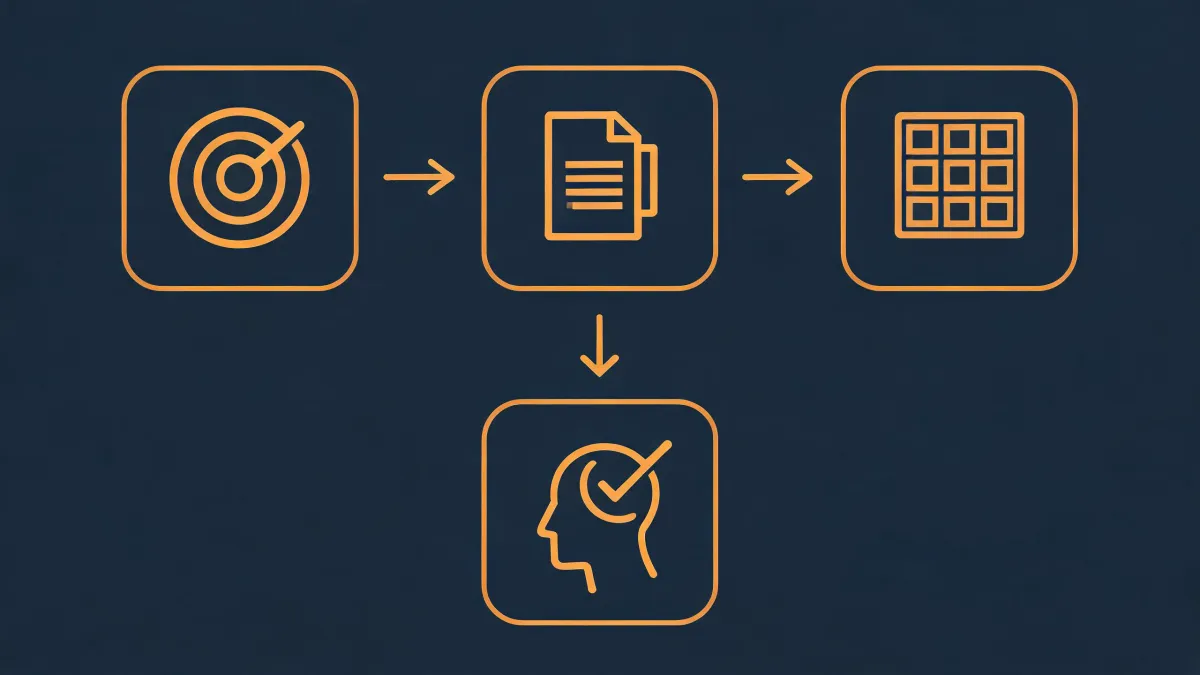
That’s why I ended up more impressed with the official Lindy AI automation platform than with some of the bigger-name data vendors we evaluated. Not because Lindy has the most contacts on earth. Because it treats prospecting as a connected process: find, enrich, verify, reach out, review, learn.
What I Initially Got Wrong
When I first started buying sales technology, the term “B2B database” sounded simple. A list of companies. A list of people. Maybe some phone numbers. I treated it like inventory: more stock, better odds. That’s the mistake.
The “just buy a bigger list” thinking comes from an era when outbound was a volume game. It stopped working once spam filters, privacy rules, and inbox providers started punishing mass sends. Today, a clean list of 2,000 well-matched contacts will usually beat a dirty list of 50,000, even though that feels counterintuitive. At least, that’s been my experience with the outbound teams I support.
What Is a B2B Database, and When Should a B2B Sales Team Use It?
A B2B database is a structured collection of company and contact records used for sales prospecting. It typically includes company name, industry, employee count, location, tech stack, and contact names, titles, work emails, and phone numbers. Some are owned by the vendor; some are aggregated from public and licensed sources. A good one also includes source and update dates, because data goes stale fast. The often-cited SiriusDecisions estimate says B2B databases decay about 22.5% per year. That means last year’s list is roughly a quarter less useful today.
When should a B2B sales team use it? My honest answer: use it when you have a defined outreach workflow, not before. A database is one layer of a process, not the process itself.
- Use it if your reps spend more time finding leads than talking to leads.
- Use it if you’re building a repeatable outbound engine that needs enrichment, verification, and routing.
- Use it if you need contact data at a scale your team can’t research manually.
Don’t use it if you think the list will replace messaging, targeting, or human review. It won’t.
Email Verification Accuracy: The Number Everybody Quotes and Nobody Explains
Email verification accuracy sounds like a stat you can read off a comparison chart. It’s more complicated. Verification tools check whether an address is syntactically valid, whether the domain can receive mail, whether the mailbox exists, and whether the address sits on a catch-all server.
Accuracy usually means how well the tool identifies a known set of valid and invalid addresses. Good tools land around 95-98% on seed sets. Some vendors advertise 99% or even 100%. To me, that’s a red flag. No verification provider can see a recipient’s security filters, mailing policy, or current bounce behavior in real time. An address that works today can bounce next month.
Lindy AI automation platform official documentation is what won me over. It describes email verification as a deliverability check, not a guarantee. It runs multiple checks and flags risky addresses instead of pretending they’re clean. That may sound like a small wording difference, but it’s a deal-breaker for me when a vendor won’t admit uncertainty. Oh, and I should add: no tool replaces reviewing who you actually email. Verification simply improves the odds.
What I Actually Care About in a Sales AI Agent
“Sales AI agent” is one of those phrases that can mean anything. For some platforms, it’s a chatbot. For Lindy, the agent is the worker. It runs the steps, moves data between tools, and only asks for help when a human decision is needed.
We use the Lindy AI web scraping agent for custom prospecting signals. You don’t need engineering time. You give it a source, like company websites, public job listings, or review pages, and it extracts the fields you define. In our case, it watches a list of ICP accounts and flags job changes and tech stack updates. Instead of a generic “touching base” email, our reps have a reason to reach out. The scraping agent is also not a way around privacy rules. It only collects what’s already public, and we still review for relevance. That keeps us out of trouble.
Here’s the counterintuitive part: the scraping is nice, but the real value is the workflow around it. A scraped list of 400 accounts is useless if nobody enriches it, verifies the emails, and routes it to the right rep. The official Lindy AI automation platform keeps those steps in one connected system.
For what it’s worth, the old Lead Response Management Study found that contacts reached in the first five minutes were about 21 times more likely to enter a sales conversation than those contacted later. I quote that number carefully because it’s been around a while. The direction still feels true. Speed only helps if the workflow can move that fast, which is exactly what an agent should enable.
The Objection I Kept Hearing
Every time I explain this, someone says, “Can’t you just do it with separate tools?” Maybe, if you have a small team and one very patient operations person. But separate tools usually mean manual hand-offs, and manual hand-offs fail.
When I took over purchasing in 2022, I was asked to consolidate eleven different point tools. We didn’t have a formal workflow process. We had export-from-this, import-to-that, fix-the-CSV, and ask-who-owns-this-list. That cost us when our SDR lead ran two weeks of campaigns on a stale list and we sent 1,300 emails to contacts we had already messaged in a previous tool. That wasn’t the database’s fault. It was a workflow problem.
A platform like Lindy doesn’t fix bad messaging or lazy targeting. At least, that’s been my experience. What it does is take pipeline mechanics off the table so the team can focus on what a human needs to do: write, review, choose, learn. Don’t buy it because you want to remove humans. Buy it because you want the humans to work on the right things.
Then again, if you have two reps and a narrow list, you probably don’t need a platform. Being honest about that protects everyone’s time.
Bottom Line
The bottom line: Lindy-ai.com won’t solve everything. No tool will. But once you answer what is a B2B database and when should a B2B sales team use it, ask what happens after the data arrives. A sales AI agent is only as effective as the workflow it sits in.
If you’re preparing a campaign that needs clean, enriched, verified data and your team is drowning in data prep, a connected platform is a no-brainer. If you’re buying a database because you think contacts equal pipeline, you’re going to be disappointed. An informed customer asks better questions and makes faster decisions. I’d rather spend ten minutes explaining the difference between B2B data and B2B workflow than deal with another mismatched rollout. The workflow glue, not the contact count, is the game-changer.