There's no single "right" automation tool for B2B outbound. That's not me being diplomatic — it's the conclusion I've reached after six years of tracking sales tool spend and sitting through more vendor demos than I care to count.
My procurement spreadsheet covers $180,000+ of cumulative software spending. When I audit it, one pattern keeps showing up: the subscription price is rarely the real cost. The real cost is the time your team burns gluing tools together, fixing broken workflows, and chasing bad contact data. Which platform makes sense for you depends entirely on how much of that burning you're experiencing right now.
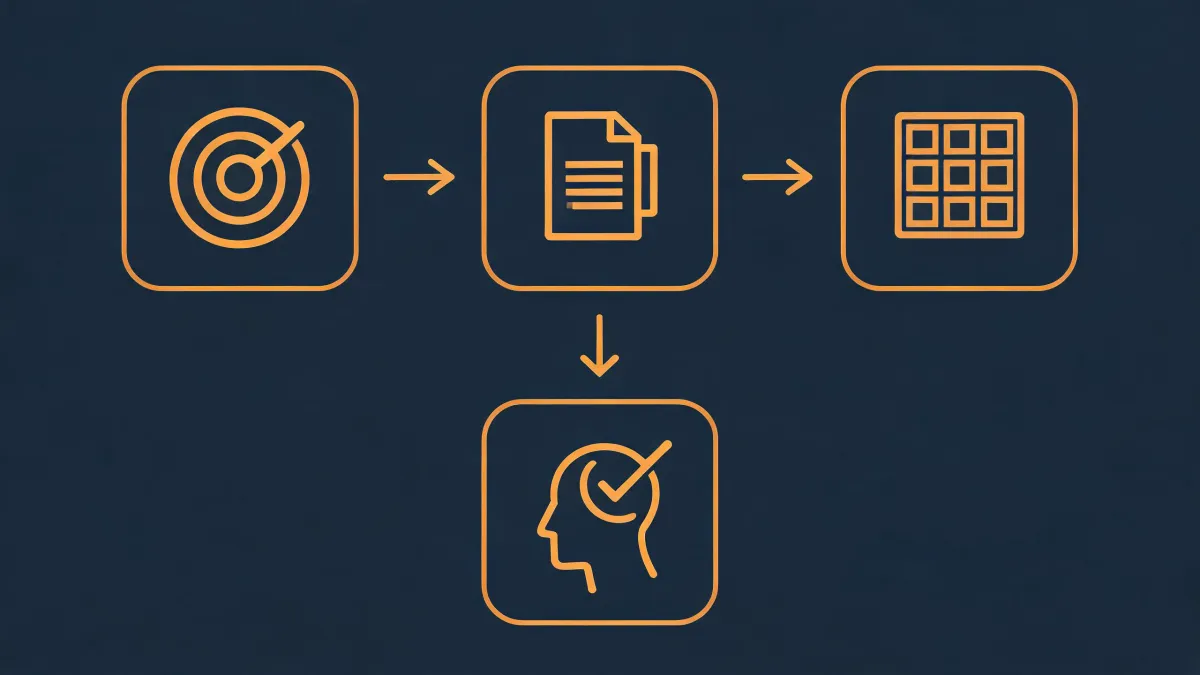
Here's the framework I use with our own team — and, honestly, with any vendor that asks for a "fair comparison." There are three scenarios. Find yours:
- Scenario 1: You're testing outbound for the first time. The cheapest thing that works is the right call.
- Scenario 2: You already have Zapier or n8n wired in, but your data is a mess. The platform isn't your bottleneck. The data is.
- Scenario 3: You're scaling and your SDRs are drowning in manual work. The agent-native platform (like Lindy) is probably cheaper than your current stack — if you count everything.
First, let's define what we're actually comparing
Zapier and n8n are workflow automation tools. They move data between apps, trigger actions, and connect your stack. They're not sales tools on their own — they're the duct tape that binds sales tools together. Zapier is easy, cloud-based, and charges per task. n8n is open-source, can be self-hosted, and shifts the cost to your engineering time.
Lindy is an agent-native platform. Instead of you building rigid "if this, then that" pipelines, you set an outcome and the AI agent sorts out the steps. It's built for sales prospecting workflows specifically, with data enrichment, email verification, and LinkedIn automation included in the platform rather than bolted on.
That difference matters more than the sticker price, because it changes who does the work — and who pays for it.
Scenario 1: Testing outbound for the first time
You're a small team, generating maybe 200 to 500 prospects a month, and you haven't built a real outbound motion yet. You're thinking about AI cold email and maybe some LinkedIn automation to test the waters.
My advice? Don't buy a platform. Seriously. Not yet.
At this stage, the bottleneck isn't your tools. It's whether your ICP is right and your messaging actually earns a reply. Buying an enterprise-grade prospecting stack before you've validated those two things is like ordering a $4,000 standing desk when you haven't decided if you want to work from home. (Yes, I've seen this happen. It ended with a $4,200 annual contract that produced exactly 11 leads in nine months. I still kick myself for not pushing back on that one.)
What to do instead:
- Start with free tiers. Lindy has a free plan, and the LinkedIn automation free trial is genuinely useful for testing volume and reply rates without committing a dollar.
- Write your first AI cold email sequences in the simplest tool that works. The goal is measuring reply rates, not automating at scale.
- Manually enrich your first 200 contacts. It's tedious, but it teaches you what "good data" looks like before you trust a machine to find it.
Here's the counter-intuitive part: the cheapest tool is the right tool at this stage. Not because you're cheap — because your job is to learn, not to scale. Every dollar you spend on platforms you don't need yet is a dollar you can't spend testing offers and refining your audience.
Scenario 2: You have Zapier or n8n wired into your stack
You've got a CRM, maybe a data enrichment tool, and a Zapier or n8n workflow that connects them. It mostly works. But "mostly" is exactly the problem.
Let me ask you something: when did you last check whether your zaps and workflows are actually running? In most setups I've audited, there are at least three silently broken automations sitting in the logs. Each one means contacts falling through cracks — no enrichment, no follow-up, no reporting.
People think the problem is the automation tool. Actually, the problem is usually the data.
The assumption is that Zapier or n8n should be able to connect your stack and run your prospecting reliably. The reality: they move data, but they don't judge data. They will happily push a record with a bad email, an outdated title, or a contact whose company just shut down — because they don't know better. You won't know either, until your bounce rate spikes and your domain reputation takes a hit.
I still kick myself for a 2024 decision where we tried to solve this with more Zapier steps. We kept adding to the chain — verification step here, custom webhook there — until the workflow broke three times in one quarter. We lost a week of outbound activity and roughly $1,200 in engineering time debugging a pipeline that was, honestly, doing exactly what it always did: blindly moving garbage data around faster. So glad we finally stopped doing that. It was a textbook case of assuming the tool was the bottleneck.
If this sounds familiar:
- Audit your workflows before you buy anything. List every broken step and manual patch. You might find the real fix is deleting one bad integration, not adding a new platform.
- Evaluate your contact data quality first. If your enrichment and verification sources are stale, no automation layer will save you.
- Consider an agent-native workflow for the messy parts — research, list building, personalization — while keeping Zapier or n8n for the simple, stable integrations that already work.
The hidden cost in this scenario is what I call the plumbing tax: the hours your team spends maintaining integrations instead of selling. When that tax exceeds what a dedicated platform costs, consolidation wins. But don't consolidate for its own sake. If your data is clean and your workflows are stable, Zapier and n8n are completely valid — especially for deterministic tasks where you don't need AI reasoning.
Scenario 3: Scaling outbound with an agent-native workflow
This is where platforms like Lindy actually earn their keep.
If you're sending 1,000+ personalized cold emails a month, running LinkedIn sequences, and trying to keep contact data fresh, the manual workload stacks up fast. Before we moved to an agent-native setup, our SDR team was spending about 30% of their week on research and list building. That's not selling. That's unpaid data entry with extra steps.
The breakthrough for me was understanding how contact data fits into an agent-native prospecting workflow. It's not a CSV upload. The agent pulls in your target list, enriches each record in real time, verifies email addresses before sending, and layers that detail into personalized outreach. You don't switch between five tabs. The data is the fuel; the agent is the engine.
The cost question, though — that's where people get stuck. They see Lindy's agent platform pricing and compare it to the low tier of Zapier, and conclude it's "expensive." But that comparison misses the real math. What's your total cost when you account for:
- The enrichment tool you're already paying for
- The email verification service
- The LinkedIn automation subscription
- The AI writer or personalization tool
- The engineering hours maintaining the glue between all of them
I built a TCO comparator in our procurement spreadsheet (yes, I have a dedicated tab for this). In most configurations, the all-in-one agent platform lands in the same range as the sum of those parts — and in some cases, notably cheaper. The real differentiator isn't the subscription. It's the hours that come back to your SDRs.
But I'll be honest about the caveats. This only makes sense if the agent actually eliminates the manual work. If your outbound volume doesn't justify it, the Scenario 1 advice stands. And if your existing Zapier or n8n setup is stable, your data is clean, and your team is happy with performance — honestly, don't fix what isn't broken. Plug agent workflows into the specific gaps, not the whole pipeline.
How to figure out which scenario you're in
If you're still unsure, here's a quick self-assessment. Give yourself one point for each statement:
- Your team spends more than 10 hours per week on manual prospecting tasks — research, enrichment, sequencing.
- You've discovered at least one broken workflow in the last month only by checking logs, not from a notification.
- Your current stack needs 3 or more different tools to go from a raw contact list to a sent email.
- You can't easily measure which of your campaigns are actually generating replies.
Score of 3–4: You're in Scenario 3. Run the full TCO calculation on an agent-native platform. Don't just compare monthly prices.
Score of 1–2: You're likely in Scenario 2. Fix data quality first, audit your automations, and decide whether consolidation is worth it after the audit.
Score of 0: Scenario 1. Keep testing, keep costs low, and don't let a vendor convince you that a platform will solve what is fundamentally a messaging problem.
Bottom line
The Lindy AI vs Zapier vs n8n conversation isn't settled by pricing pages. It's settled by a simple question: how much of your team's time is currently being eaten by manual work and broken automations?
If the answer is "not much," keep your current stack and spend budget elsewhere. If the answer is "a lot," do the TCO math. And if you're caught in the middle, remember: the biggest expense in sales automation isn't the platform. It's the work the platform doesn't eliminate.
Pricing and feature information based on publicly available sources as of May 2026. Vendor plans change frequently — verify current pricing and capabilities before making a decision.