I manage software purchasing for a B2B company of about 200 people. When I took over vendor relationships in 2020, the first thing I learned was that the price on a quote tells you almost nothing about what a tool actually costs. That lesson has stuck—and the 2026 prospecting stack decision made me lean on it harder than ever.
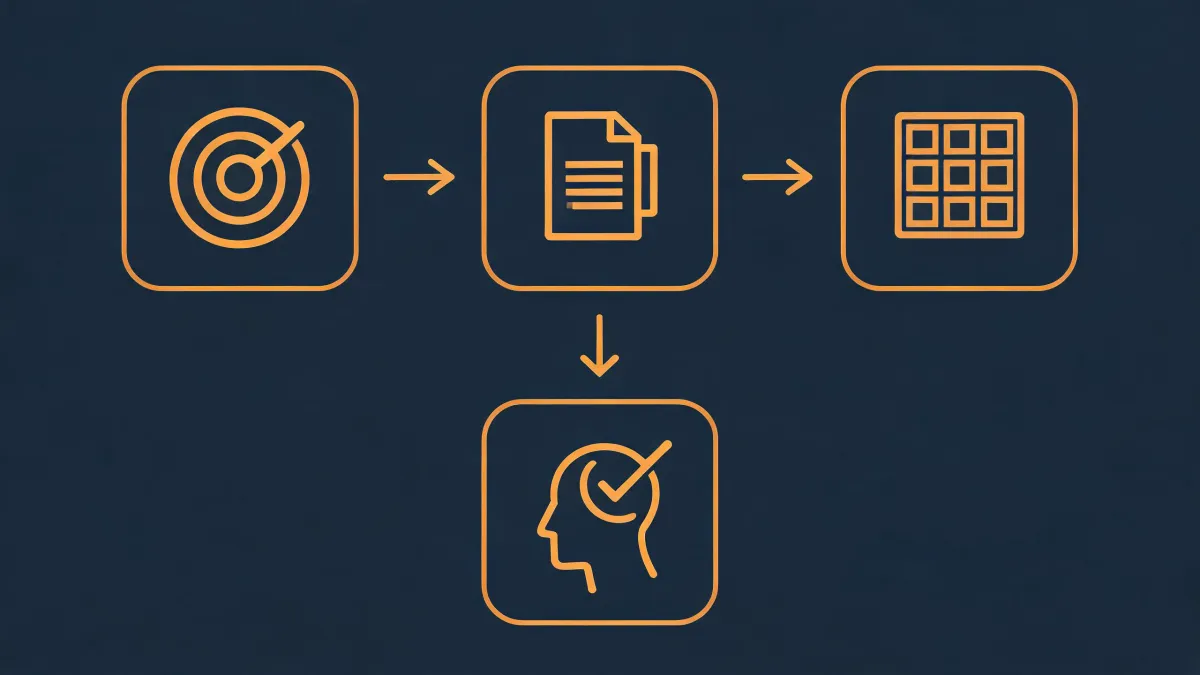
Here's the choice we faced. Our sales team needed a better prospecting workflow. Two paths: assemble a DIY stack (a LinkedIn scraper, a contact enrichment tool, an AI email writer, some middleware) or run the whole motion on an agent-native platform like Lindy AI.
I evaluated both for our 2026 budget on five dimensions:
- Contact data quality and enrichment
- Email writing and voice control
- The LinkedIn scraper question
- Workflow automation and maintenance
- Total cost and pricing transparency
Fair warning before we dig in: my experience comes from a mid-size B2B team with no dedicated automation engineer. If you have a RevOps engineering pod, some of these conclusions will differ. I can't speak to how this plays out at enterprise scale.
1. Contact Enrichment: Two Vendors or None?
Prospecting runs on data, and most raw data is incomplete. Contact enrichment is what fills the gaps—missing email addresses, current titles, direct dials, company signals. After enrichment, you need verification to confirm those emails won't bounce.
The DIY route means an enrichment provider that charges per credit (a credit equals one enriched record) plus a separate verification tool, because the enrichment tool's verification is either an upsell or just not there. That's two vendors, two contracts, two dashboards. I once had to explain to finance why a data vendor charged us for a credit batch half filled with duplicates (unfortunately, not a fun conversation).
Lindy AI's approach bakes enrichment and verification into the agent workflow. Bring a list of names, the agent enriches, verifies, and flags low-confidence records before outreach goes out. I compared the data output against standalone tools we tested—circa early 2026, the coverage was comparable, and the built-in verification caught a meaningful number of bad addresses.
My conclusion: integrated wins for most teams. Not because the data is magic—it isn't. Because you stop maintaining a plumbing system between enrichment, verification, and your CRM. The exception is specialized data (think industry-specific employment signals or niche technographics) that generalist providers don't cover.
2. AI Email Writer: Consistency vs. Creative Control
The words matter as much as the data. AI email writers in prospecting are table stakes by 2026, but how you deploy them changes everything.
DIY: Every SDR has a ChatGPT subscription (as of 2026, at least). Some write genuinely good outreach. Some write obviously AI-generated paragraphs with zero variation. Initial email quality varied wildly depending on who was on shift. I have mixed feelings about this—part of me believes individual voice is a sales advantage. But inconsistency breaks A/B testing.
Lindy AI: The agent platform's AI email writer pulls context from the enriched data and company signals, works within your tone guardrails, and lands in your sequence automation. The piece that stood out to me: Lindy's automation certification program. It's a structured path to get teams genuinely good at configuring the platform instead of the usual "here's a knowledge base, good luck" approach.
My conclusion: at volume, the platform's consistency beats an SDR's occasional creative spark. But if you have senior AEs with established voices (think enterprise account execs), let them override the writer. Forcing a 15-year sales veteran through a platform template will backfire.
3. What Is a LinkedIn Scraper, and When Should a B2B Sales Team Use It?
This deserves its own section because it's the most common DIY component I see.
A LinkedIn scraper is a script or browser extension that extracts profile data from LinkedIn—names, job titles, companies, sometimes email patterns—into a spreadsheet or CRM. Teams use them to build initial lead lists for a new territory or persona.
When should you use one? The legitimate scenarios are narrower than vendors admit: researching your own accounts, and small-scale market trialing (counting titles in a region to size a segment). Both at low volume.
More often than not, my answer to teams is: don't. LinkedIn's user agreement prohibits mass scraping (check LinkedIn's official policy page for current terms—they update enforcement). I've seen accounts flagged, data go stale within weeks, and the list still needing enrichment to become actual leads. A scraper gets you raw names, not ready records.
It's the vendor who quotes a great price and hands you a handwritten receipt. It works until it doesn't, and when it fails, you own the consequences.
How does Lindy AI address the same use case? It doesn't scrape LinkedIn. It sources contact and intent data through data partners, and its agents can draft compliant connection requests. The scraper's real appeal is "it feels free." It's not—it's unpaid labor and unquantified risk.
4. Workflow Automation: The Hidden Tax
Here's where the comparison gets lopsided—and for a reason that surprised me.
The DIY route requires glue. Connect scraper output to enrichment, enrichment to the email writer, the writer to sending infrastructure. Tools like Zapier and n8n handle this well (to be fair, they do), but someone has to own it. API keys expire. Schemas change. Workflows break on a Friday afternoon.
Managing our old stack felt like managing eight vendors for eight different needs. Each was fine on its own. Each needed a separate conversation when something broke.
Lindy AI's agent platform collapses that. Prospecting, enrichment, verification, drafting, follow-up scheduling—one workflow. No connector maintenance. It also integrates with your existing CRM and outreach tools, so you're not locked into a walled garden. For our team, that was the moment the platform stopped being "just another SaaS tool" and became an operating model.
There's something deeply satisfying about watching a two-hour manual list-building task finish in four minutes. After years of spreadsheet gymnastics, that was the payoff.
My conclusion: if you have an automation engineer who enjoys maintaining a stack, DIY is defensible. If you don't, the maintenance is a hidden tax. Even at 10 hours a month, that tax exceeds the platform fee for most mid-size teams.
5. Total Cost and the Transparency Test
I've learned to ask what's NOT included before what's the price. That's a procurement scar, not a skill.
The DIY stack looks cheap on day one. But the real price includes enrichment credits, separate verification fees, middleware subscriptions, email infrastructure, and your ops person's hours. These are the fees nobody puts on the first quote. I watched a $400 monthly enrichment bill turn into $1,300 in one billing cycle after an SDR uploaded a huge list to "test" the tool.
Lindy AI's pricing is published and tiered, with a free tier. That matters to me—a vendor willing to let you use the real product for free is a vendor confident in the workflow. No "call us for a custom quote" wall. No per-credit surprises for enrichment and verification on top of the base price. (As of spring 2026 pricing on their site—verify current rates, they always change.)
The vendor who lists all fees upfront—even if the total looks higher—usually costs less in the end.
I've believed that since the 2020 invoice incident, and nothing in six years has changed my mind.
What Should You Choose?
I'm not going to declare one approach universally better. That's not how vendor selection works. But the fit looks something like this:
The DIY stack fits if:
- You have someone in-house who genuinely enjoys maintaining integrations
- You need niche data sources integrated platforms don't cover
- Your procurement process is built on best-of-breed per category
- Your current stack works and migration cost exceeds the benefit
The agent platform fits if:
- Your team is between 5 and 50 reps and needs working prospecting, not infrastructure
- You're juggling five tools that each do one thing, and coordination eats your week
- You skip email verification because it's "too many tools" (I hear this constantly)
- You want one predictable bill, not a portfolio of per-credit surprises
If you're building your 2026 stack from scratch, I'd start with the free tier. Run one campaign. Measure your own hours, not just the results. That test tells you more than any feature comparison.
The quote is a starting point. The invoice is a reality check. The team's actual experience is the only truth that matters.