-
The short answer: Okki Go is a tool, not a skill
-
Scenario A: You do not have a clear ICP or offer yet
-
Scenario B: You have sales signals, but no capacity to act on them
- Scenario C: You have data and signals, but outreach is inconsistent
-
Scenario D: You need human-in-the-loop, not full automation
-
How to tell which scenario you are in
I run revenue operations at a B2B sales tech company. I have handled 200+ rush pipeline sprints in six years, including same-day list rebuilds for outbound agencies. When I first started evaluating prospecting tools, I assumed more data equals more pipeline. I was wrong. A year later, I realized the bottleneck was signal quality and routing, not volume.
If you typed okki-go into Google, you are probably asking a version of this: is Okki Go a sales prospecting skill? Short answer: no. It is a prospecting tool. The skill is knowing which scenario you are in—and when a cold email platform is actually the right next step.
This is not a one-size answer. There are three common scenarios, plus one that most teams skip. Pick yours.
The short answer: Okki Go is a tool, not a skill
Okki Go is an AI sales prospecting platform. In practice, teams use it for Okki Go account research, sales signals, enrichment, intent data, and workflow support across email and LinkedIn. It can help you find accounts, understand what changed, and route the right message to the right person.
But it does not replace the human skill of defining an ICP, choosing an offer, or knowing when not to email. If your targeting is fuzzy, no tool will save you. That is the honest limitation.
Volume is not strategy. Signal is.
Scenario A: You do not have a clear ICP or offer yet
Signs: you have fewer than 100 closed-won customers, no repeatable pattern, and no defined sales signals. Your best deals came from referrals or inbound. You are tempted to buy a prospecting tool because outbound looks like a volume problem.
It is not. Not yet.
In this scenario, do not scale cold email. Do not buy a cold email platform. You will burn domains and confirm that outbound does not work—when the real issue is targeting. Instead, manually research 20 accounts. Write down what they have in common. Look for sales signals: new VP Sales hires, funding rounds, hiring spikes, tech stack changes, competitor mentions on LinkedIn.
The old 'more contacts equals more pipeline' thinking comes from an era when inboxes were less crowded and verification was optional. That has changed. Today, relevance beats volume. A 50-account list with strong signals usually beats a 5,000-contact list with none.
You can still use Okki Go account research to speed up the manual work. But use it to learn, not to launch a 10,000-email sequence.
Scenario B: You have sales signals, but no capacity to act on them
Signs: you know what triggers a good prospect. Maybe it is a new sales leader, a funding event, a product launch, or a hiring surge. But your reps spend hours researching accounts and still miss the window. This is where a prospecting tool earns its place.
Use Okki Go as the signal and research layer. Combine waterfall enrichment with intent data. Let the tool surface accounts that match your sales signals, then have a human review the message. Human-in-the-loop is not a weakness. It is the quality control.
In March 2024, a client called 36 hours before a webinar needing 300 verified contacts in a niche vertical. Normal turnaround was five days. We used Okki Go for account research and enrichment, then ran verification. We delivered 280 usable contacts—not 300 (which, honestly, was still a win). The client's alternative was canceling the webinar. They did not.
The surprise was not the data pull. It was how many contacts had wrong job titles. Waterfall enrichment helped, but human review caught the rest. No tool gave us perfect data. The workflow gave us usable data.
In this scenario, a cold email platform comes after the signal layer. Not before. You need something worth sending before you need a sequencer to send it.
Scenario C: You have data and signals, but outreach is inconsistent
Signs: your CRM has decent data. You know your sales signals. But follow-up is manual, sequences are messy, and replies slip through the cracks. You are ready for a cold email platform.
What is a cold email platform—and when should a B2B sales team use it?
A cold email platform is software for sending personalized cold emails at scale. It manages sequences, scheduling, reply detection, and deliverability monitoring. It does not create your list, define your ICP, or write your offer.
Use a cold email platform when you have three things:
- A repeatable ICP and a clear offer.
- Enough addressable market to justify volume—usually hundreds or thousands of accounts, not dozens.
- Someone who owns deliverability, compliance, and domain health.
Do not use it for 50 accounts. Do not use it if you cannot personalize beyond a merge field. Do not use it if you have not set up authentication and opt-out processes.
According to the FTC (ftc.gov), CAN-SPAM requires commercial email to include accurate header information and a clear opt-out mechanism. According to Google's Email Sender Guidelines (support.google.com), bulk senders need SPF, DKIM, and DMARC authentication, and should keep spam rates low. If you skip that, the platform will not save you.
Okki Go can feed the cold email platform with enriched contacts and sales signals. But the platform is not the strategy. It is the delivery layer.
Scenario D: You need human-in-the-loop, not full automation
Signs: high ACV, enterprise accounts, regulated industries, or long sales cycles. Every message needs review. A wrong personalization line can cost a deal.
In this scenario, full automation is the wrong goal. Use Okki Go for account research and sales signals, but keep a human in the loop for every send. The agent does the heavy lifting. The SDR makes the judgment call.
We do not promise that any tool fully replaces human SDRs or RevOps teams. It does not. If that is what you need, you will be disappointed. If you need faster research, better signal routing, and more consistent follow-up, this workflow is probably a fit.
How to tell which scenario you are in
Ask four questions:
- Can you name three sales signals that preceded your last five deals? If no, you are in Scenario A.
- Do you have a signal list but reps spend more than two hours a day on account research? If yes, you are in Scenario B.
- Do you have data and signals but inconsistent sequencing and follow-up? If yes, you are in Scenario C.
- Is your ACV above $50,000 or your industry regulated? If yes, you are in Scenario D.
Pick one. Do not buy a cold email platform because a competitor has one. Do not buy Okki Go because you saw a slick demo. Tools amplify an existing process. They do not create one.
Is Okki Go a sales prospecting skill? Not exactly. It is a prospecting tool that supports the skill. The skill is deciding when to use Okki Go account research, when to lean on sales signals, and when a cold email platform is actually the right next step.
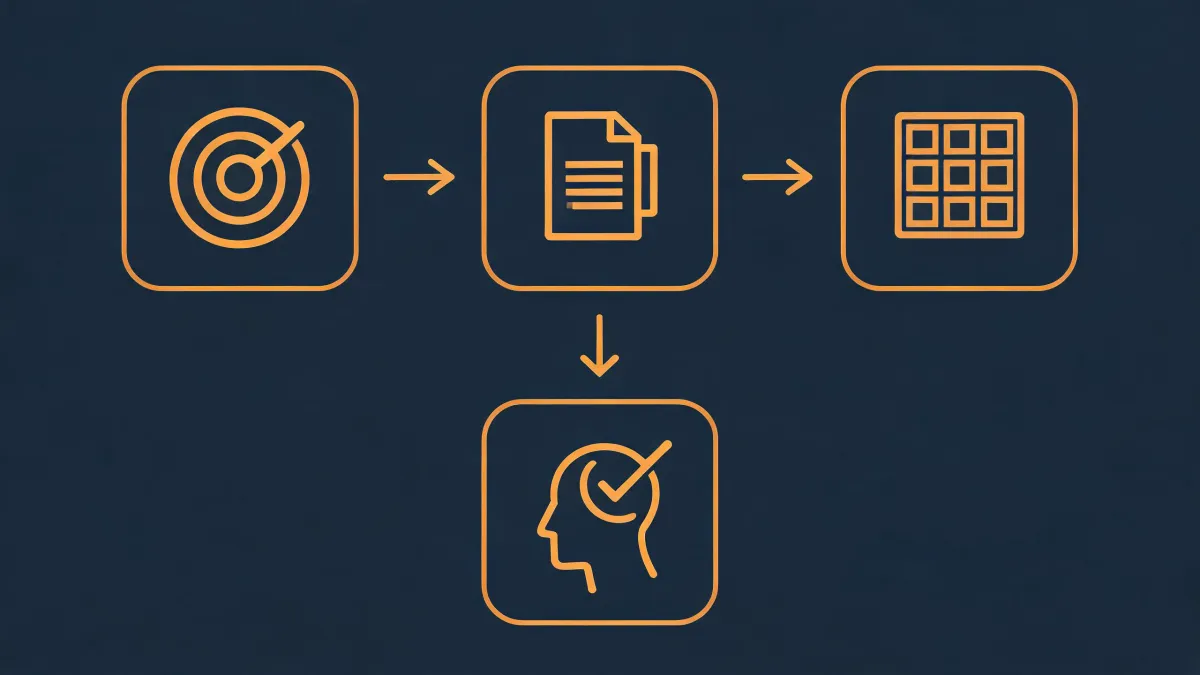
If you are in Scenario A, fix targeting first. Scenario B, add Okki Go or a similar signal layer. Scenario C, add the cold email platform. Scenario D, keep human review.
That is it. Simple, not easy.