At 9:12 a.m. on Jan. 6, 2026, Maya, our VP of RevOps, skipped the small talk: “New outbound stack — can you vet by Friday?”
Context: I’m the operations coordinator at a 90-person B2B SaaS company. I manage software purchasing and vendor contracts — around $400,000 in annual spend across 30-some tools — and I report to both operations and finance. I’m not a RevOps expert. I’m the person who asks why the invoice is higher than the quote, and whether we actually need this.
So Maya’s request should have been routine. It wasn’t. Six weeks later, after one failed campaign and a crash course in intent data providers, cold email automation, Sales Navigator scrapers, and okki-go, I finally understood what “prospecting stack” actually means.
The backstory: why we needed a better outbound motion
Through 2024 and 2025, this company was happily inbound-led. Webinars, content, and referrals kept the pipeline full. Then executive leadership approved a Q1 2026 product launch, hired three SDRs, and told our SDR manager, Conor, to build outbound from zero.
By early January, Conor’s requirements were clear: find accounts that are genuinely in the market, reach them at verified email addresses, automate the repetitive parts, and don’t make our first impression look spammy.
“Don’t make us look spammy” was the line I kept coming back to, even when I didn’t fully understand the tech.
Where I went wrong first
I made a classic rookie mistake: I asked a friend instead of someone who does this for a living. My buddy runs sales at a 15-person startup and gave me confident advice: “Skip the expensive platforms. Buy a Sales Navigator scraper, plug it into a cold email automation tool, and you’re done.”
That sounded perfect to me. I’m the person finance questions when we overspend. A lower-cost path felt like a win.
What is a Sales Navigator scraper, and when should a B2B sales team use it?
For anyone else who gets dragged into this conversation: a Sales Navigator scraper is a browser extension or script that exports visible profile data from LinkedIn Sales Navigator search results into a spreadsheet. Names, titles, companies, profile URLs — the information that’s already on the screen. It does not find hidden email addresses. It does not tell you which accounts are ready to buy. It is a collection tool, not a prospecting strategy.
That doesn’t mean it’s useless. A B2B sales team should use one when it needs to build a targeted list for manual research, when it has separate tools for enrichment and verification, and when a human will review each lead. It’s the wrong tool when the plan is “scrape 10,000 names and let the automation do the rest.”
I learned that the expensive way. The scraper itself worked fine. It pulled roughly 850 contacts from a Sales Navigator search in 15 minutes, and the CSV looked great. Then we checked: only about 30% of rows had an email address. The rest needed enrichment, and every enriched address still needed verification. So we added an email finder. Then a verifier. Then a sending tool. I had four subscriptions doing what I thought was one job.
The first automated campaign went out in late January. It went badly. The bounce rate was over 9% in the first week, our sending domain’s reputation dropped, and the few replies we got were mostly “remove me.” A lesson learned the hard way.
And here’s the thing: every bounce was a tiny hit to our company’s credibility. Somewhere, a real person saw a message from us and thought “this is spam.” That’s not a deliverability problem. It’s a brand problem.
The meeting that changed my approach
After that campaign, Conor and Maya called me into a room and walked me through what a proper prospecting workflow looks like. That meeting is where I finally got the vocabulary.
What I learned about intent data providers
At a conference in 2024, someone said “intent data” and I nodded along without understanding it. Here’s the plain-English version: intent data helps you spot accounts that are showing active buying signals. They might be searching for a specific problem, reading comparison content, or researching vendors in your category.
(Think about it like this: a list tells you who to contact. Intent tells you who to contact this week.)
There are first-party intent data providers that track signals from your own website and product, and third-party providers that aggregate behavioral data across the web. Both can be useful. But Conor made the point that changed my thinking: “A perfectly verified email is useless if the account has no reason to buy right now.”
How does okki go work? The okki go workflow for RevOps
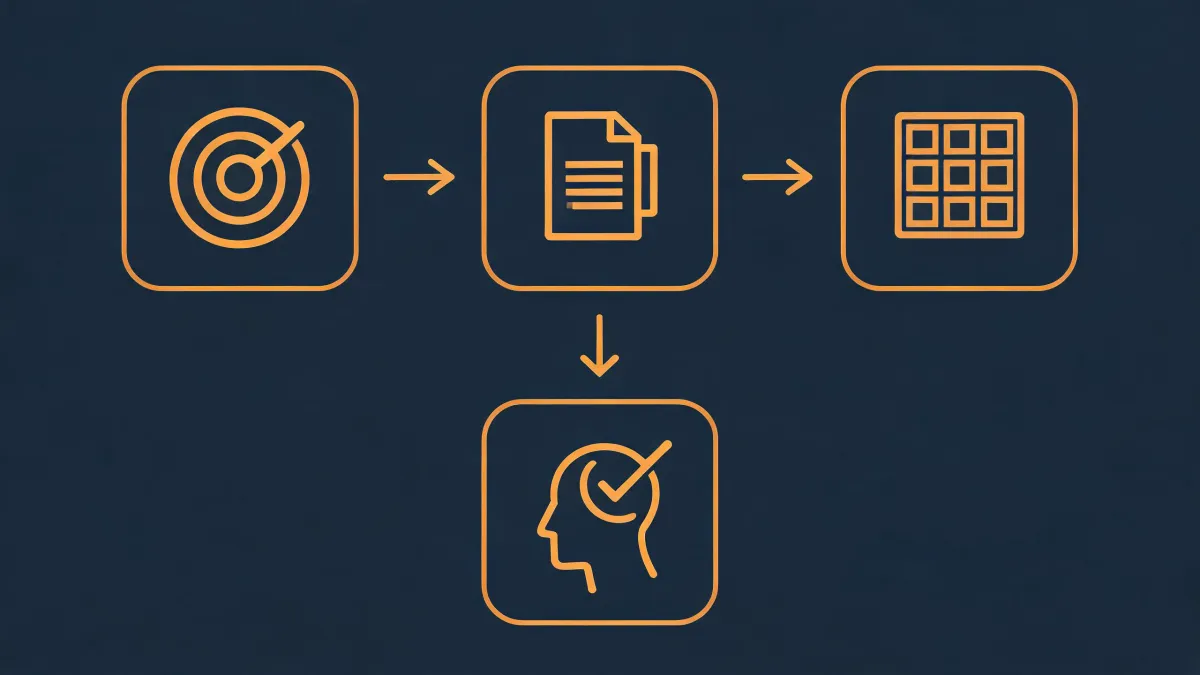
Maya had been evaluating okki-go for a few weeks when she said, “This isn’t another point tool. It strings the workflow together.” She showed me the okki go workflow for RevOps, and I took notes like a student before a final exam:
- Connect your CRM and define the play. You start by linking okki-go to your CRM and defining the ICP, territories, or campaign focus.
- The agent builds the prospect pipeline. Instead of a single static CSV, the agent creates and updates account and contact lists based on the play, engagement, and feedback from the team.
- Waterfall enrichment fills the gaps. When an email is missing, okki-go checks multiple sources in a sequence — if one source has no match or low confidence, it moves to the next. One database might have a 40% fill rate alone; the waterfall is what makes coverage worth using.
- Intent signals are layered in. Accounts showing current research behavior get prioritized, so SDRs are not just working alphabetical lists.
- Human-in-the-loop review happens before sending. okki-go prepares context and sequence drafts, but a human SDR reviews and approves before anything reaches a prospect. It supports the team; it doesn’t replace judgment.
That last point is why I didn’t run away. I’m not interested in software that talks to our prospects without a human taking responsibility for the words.
The part where I hesitated
Now the honest part: I hesitated on price. okki-go costs more than a scraper and a basic automation tool, and I am the person who has to explain budget decisions to finance.
I calculated the downside. Worst case: a five-week pilot that didn’t work and an awkward budget review. Best case: our SDRs stopped looking like spammers and started having real conversations.
I asked okki-go’s team whether they could guarantee reply rates. They said no — and that actually made me trust them more. Any tool that promises “x% replies” is promising something it doesn’t control.
What happened in the pilot
We ran okki-go as a five-week pilot from Feb. 9 to Mar. 13, 2026, with three SDRs on one product segment. We used a fresh sending subdomain and warmed it up for two weeks before the pilot started. I tracked the numbers myself:
- 1,480 personalized emails sent across two sequences
- Bounce rate of 1.6% — a massive improvement over the 9% disaster
- Eight qualified meetings booked
Eight meetings isn’t a dramatic number, but for a brand-new outbound motion it was enough to justify continuing. More important to me: not one prospect replied “why are you emailing me?” That alone felt like progress.
The SDRs still wrote the messages. They still decided which accounts deserved follow-up. okki-go handled list-building, enrichment, and prioritization; it didn’t replace the humans who build relationships.
What I’d tell another non-technical buyer
If you’re the one evaluating sales prospecting tools and you don’t live in RevOps, here’s what I wish someone had told me:
- Ask what each tool actually produces. A Sales Navigator scraper produces a spreadsheet. Cold email automation delivers and sequences messages. Intent data providers produce prioritization signals. None of these replace the others, and none of them are “the whole stack.”
- Define quality before comparing price. For us, quality meant verified emails, accounts with intent, and messaging a human approved. It did not mean sending the most emails possible.
- Find the human-in-the-loop. If a tool promises to fully replace your SDRs, run. The goal is to let SDRs spend their time on judgment and relationships.
- Remember what the first email says about your brand. I’ve handled vendor purchasing for five years, and I’ve learned that the cheapest option usually costs more in reputation. Your prospects form an opinion of your company the second they open your email. Make sure the software you choose protects that moment.
I almost canceled the okki-go pilot before it started. Instead, I watched a tool quietly turn a clumsy outbound effort into something a B2B brand could be proud to send. Sometimes the most expensive choice isn’t the premium platform. It’s the shortcut that makes you look cheap to the people you’re trying to impress.