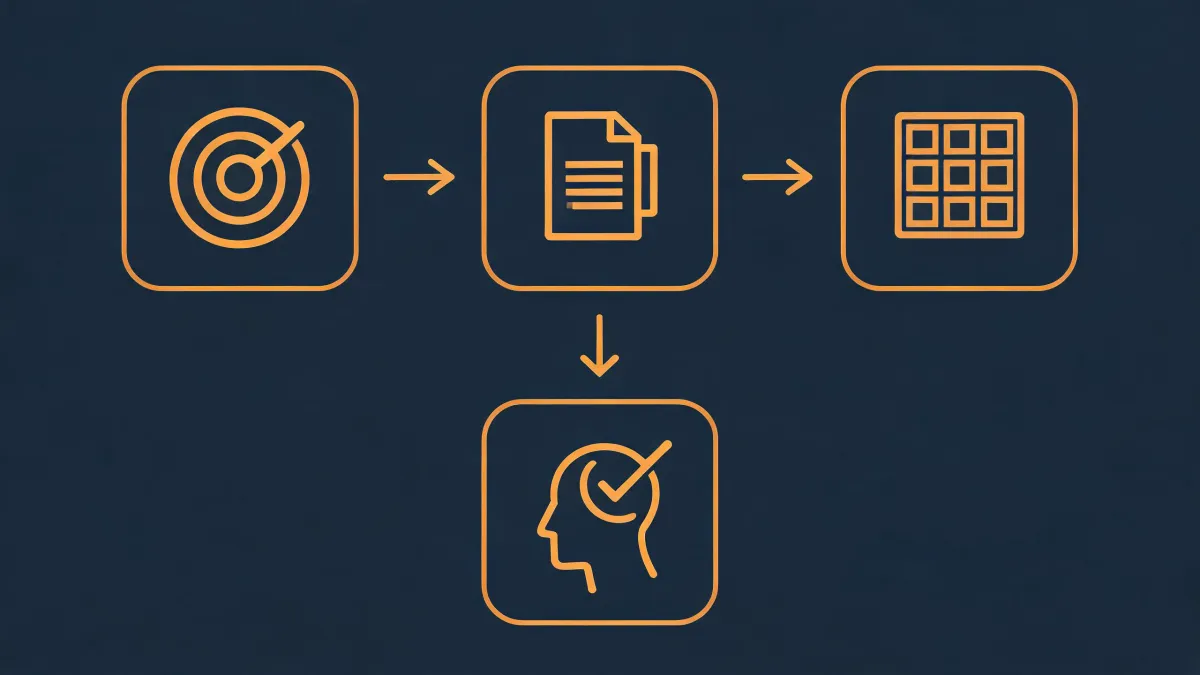
-
Step 1: Document your current prospecting workflow before you open the pricing page
-
Step 2: Read Lindy AI's official pricing with specific questions, not just headline numbers
-
Step 3: Audit the data quality and verification costs—this is where hidden fees hide
-
Step 4: Decide whether intent data is worth it—and most teams shouldn't buy it yet
-
Step 5: Test the LinkedIn automation workflow with a small pilot
-
Step 6: Calculate total cost of ownership, then make the call
-
Common mistakes I see teams make
If a B2B sales or revenue operations team is evaluating Lindy AI, this checklist will save you from the mistake I made a few years ago: buying a prospecting tool based on feature count instead of what my team would actually use.
I've managed B2B tooling budgets for 6 years, tracked every invoice, and compared more vendor quotes than I care to count. The pattern I see over and over: teams get excited about AI features, sign an annual contract, and realize 4 months in that they're using maybe 30% of what they're paying for.
This is a straightforward 6-step checklist. Do these in order. Skip steps at your own risk.
Step 1: Document your current prospecting workflow before you open the pricing page
I know this sounds like the obvious thing. But you'd be surprised how many teams request a demo before they can explain what their current process actually is. In my first procurement role, I made the classic rookie error: I picked a platform because the feature list was impressive, then realized our team used two features out of ten. That contract was a $4,200 lesson.
Grab a blank doc and answer these:
- What does your prospecting sequence actually look like today, step by step?
- Which steps are manual: finding leads, enriching contacts, verifying emails, personalizing LinkedIn requests?
- Where do deals get stuck or slow down?
- How many meetings did your outbound team book last quarter, and at what cost per booked meeting?
The goal isn't perfection. It's a baseline so you can measure whether a new tool makes things meaningfully better.
Checkpoint: if you can't name your current cost per booked meeting, go back and calculate it before moving on. Every step after this depends on that number.
Step 2: Read Lindy AI's official pricing with specific questions, not just headline numbers
The Lindy AI pricing page is transparent about what each tier includes—but transparent doesn't mean skimmable. Most AI sales platforms structure pricing in ways that look simple until you dig in: email credits, enrichment volume, verification limits, LinkedIn automation caps. The differences between tiers are where the real cost lives.
Answer these while you read:
- Is it per-seat, usage-based, or a mix? This matters a lot as your team scales.
- Which features are locked behind higher tiers?
- What's the limit on enrichment credits or verified contacts per month?
- Are LinkedIn automation and intent data included in the tier you're considering, or are they add-ons?
Keep a spreadsheet. Note what each plan includes and what your projected usage looks like at your current team size. The cheapest tier is rarely the one you'll actually need—but the most expensive one is probably overkill. The right tier is the one that covers the workflow you documented in step 1.
Checkpoint: you should be able to draw a line from every feature in the tier you're considering to a step in your workflow. If you can't draw that line, you're paying for something you won't use.
Step 3: Audit the data quality and verification costs—this is where hidden fees hide
Every sales platform claims to have strong data. The reality is messier. I've seen vendors advertise a low base price, then charge per-credit fees for email verification, list enrichment, and intent data access. The total cost ends up way past the advertised price.
When evaluating Lindy AI, dig into:
- Email verification: is it included at no limit, or capped? What happens when you hit the cap?
- Data enrichment: does it consume credits, and how many per record?
- List management: are there limits on the number of accounts you can track or store?
To be fair, this is an industry pattern, not a Lindy AI-specific problem. But the gap between a per-credit model and an all-included model can be huge. I built a cost calculator in year 2 of my role after getting burned on hidden fees twice, and I've used it on every vendor since.
Checkpoint: estimate your monthly contact volume, multiply by any per-credit costs, and add that to the base subscription. Compare vendors on the total number, not the advertised price.
Step 4: Decide whether intent data is worth it—and most teams shouldn't buy it yet
Intent data is one of the most hyped features in B2B sales tools, so let's get practical about what it actually is.
Intent data overview: intent data captures signals that a company is actively researching a product or topic—visiting pricing pages, reading comparison content, searching for solutions. Data providers track these signals across thousands of sites and sell them to sales teams. There are two flavors: first-party intent (your own site analytics showing what prospects read) and third-party intent (aggregated behavioral signals from across the web). For B2B prospecting, intent data helps you prioritize accounts that are already showing buying behavior instead of guessing who might be a good fit.
So when should a B2B sales team use it? Here's my honest answer: when you have a large addressable market and you need to rank accounts. Use intent data when your TAM is broad, reps are spending too many hours on research, and follow-up speed gives you a competitive edge. Skip it when your target list is under 50 accounts, your sales cycle is long and relationship-driven, or you already have more inbound leads than you can handle.
I get why vendors bundle intent data into higher tiers. It sounds like a superpower. But I do not pay for features that look good in a demo—I pay for workflows that survive contact with a busy sales team. If your reps can't follow up within 24 hours of an intent alert, the data is mostly wasted.
Checkpoint: count your active target accounts. Under 50? Skip intent data. Over 50? Write down what happens when an intent alert fires—who gets notified, how quickly, and what they do. If you can't describe that workflow, intent data isn't for you yet.
Step 5: Test the LinkedIn automation workflow with a small pilot
For many teams, Lindy AI's LinkedIn automation is the feature that tips the buying decision. And I get it—manual LinkedIn prospecting is painfully slow. But this is also the feature with the most compliance risk and the most variable results.
Before you commit, run a controlled pilot:
- Pick 20-30 leads from one target segment
- Write personalization that actually requires human judgment—not just a {FirstName} merge field
- Track acceptance rate, reply rate, and meetings booked for 2 weeks
- Watch for LinkedIn account restrictions. Automation that pushes limits too aggressively can damage your team's accounts.
I once had to make a purchasing decision within 3 days because the vendor's end-of-quarter discount was closing. Normally I'd run a full pilot, but there was no time. I went with my gut based on sales calls and online reviews. It took another quarter to unwind the contract. In hindsight, I should have pushed back on the timeline. If a vendor will not give you time to test, that's a signal in itself.
Checkpoint: did acceptance and reply rates meet or beat your baseline from step 1? If not, either the messaging is wrong or the tool isn't a fit. Don't scale until you know which.
Step 6: Calculate total cost of ownership, then make the call
Here's the TCO framework I use for every prospecting tool:
Total annual cost = subscription + data credits + verification fees + setup time (hours × loaded salary) + training time (hours × loaded salary) + integration maintenance.
Now compare that to what you're spending today:
- Manual research hours
- Separate email verification tools
- LinkedIn automation or virtual assistant costs
- Opportunity cost from slow follow-up
The strongest case I've seen for Lindy AI is teams replacing two or three point tools with one platform. The value isn't just the subscription price—it's fewer tools to manage, fewer integrations to maintain, and fewer vendors to negotiate with.
Even after I signed the contract for our current stack, I kept second-guessing. What if I'd missed a competitor with better data for the same price? Didn't fully relax until the first month of usage numbers showed the team was actually logging in and booking meetings. That's the outcome you're aiming for: a decision you can defend with numbers, not vibes.
Checkpoint: if the total cost of ownership is higher than your current stack, don't switch. If it's lower, you have your answer. It's that simple.
Common mistakes I see teams make
A few closing warnings, from personal experience:
Don't buy an annual plan before a 2-week test. Most platforms offer a free tier or trial for a reason. Use it.
Don't assume all-in-one means best-in-class. Lindy AI covers a lot of ground in the prospecting workflow—that's genuinely valuable. But it's not a full CRM, it's not a replacement for human sales judgment, and it won't book meetings for you. A vendor that promises otherwise is overselling.
Don't buy intent data as an afterthought. Either it's part of a deliberate follow-up workflow, or it's wasted money. There's no middle ground.
Take it from someone who's made these mistakes: the tool is rarely the real problem. The process around the tool is. Evaluate the process first, then the pricing, then the features. That order has saved me from more bad contracts than anything else.