-
4:12 PM, 36 Hours Before the Webinar
-
The First Attempt: Cheap Credits, Expensive Mess
-
The Turn: Stop Treating the Email Finder as the Workflow
-
What Actually Happened in the 36 Hours
-
The Result: No Guarantees, But a Cleaner System
-
What I Would Tell Someone Reading an Okki Go Review
-
The Boundary: This Was Our Context
-
The Lesson I Reuse
4:12 PM, 36 Hours Before the Webinar
I run sales ops at a mid-market B2B SaaS company. I have handled 120+ rush pipeline requests in six years, including same-day list builds for trade show teams and quarter-end SDR pushes. In March 2024, one landed on my desk at 4:12 PM on a Tuesday.
The ask: 1,200 enterprise accounts, verified contacts, intent signals if possible, loaded into our sequencer by Thursday morning. Normal turnaround for that kind of list is five business days. We had 36 hours. Missing it would have wasted an $18,000 webinar sponsorship and a partner co-marketing commitment.
When I first started handling rush list builds, I assumed the main decision was price per credit. Cheaper company database, cheaper email finder, done. Three budget overruns later, I learned that was wrong.
The First Attempt: Cheap Credits, Expensive Mess
We started with the lowest-cost option we could spin up fast. A basic company database export, a standalone email finder, and a lot of manual LinkedIn checking. By 9 PM we had 780 rows. It looked fine in a spreadsheet. It was not.
About 180 contacts had no email. Another 60 had emails that our verifier flagged as risky. Job titles were stale. Industry tags did not match our ICP. And there was no intent data at all, so the AI sales agent features we wanted to test had nothing useful to score.
The SDR team lead sent one message: 'This list will burn more time than it saves.'
She was right. We had confused a pile of records with a prospecting workflow.
The Turn: Stop Treating the Email Finder as the Workflow
That is when our RevOps lead said something I still repeat: a professional email finder is not the workflow. It is a checkpoint inside the workflow.
So how does a professional email finder fit into an agent-native prospecting workflow? It sits between enrichment and verification. It feeds verified contacts to the agent, not the other way around.
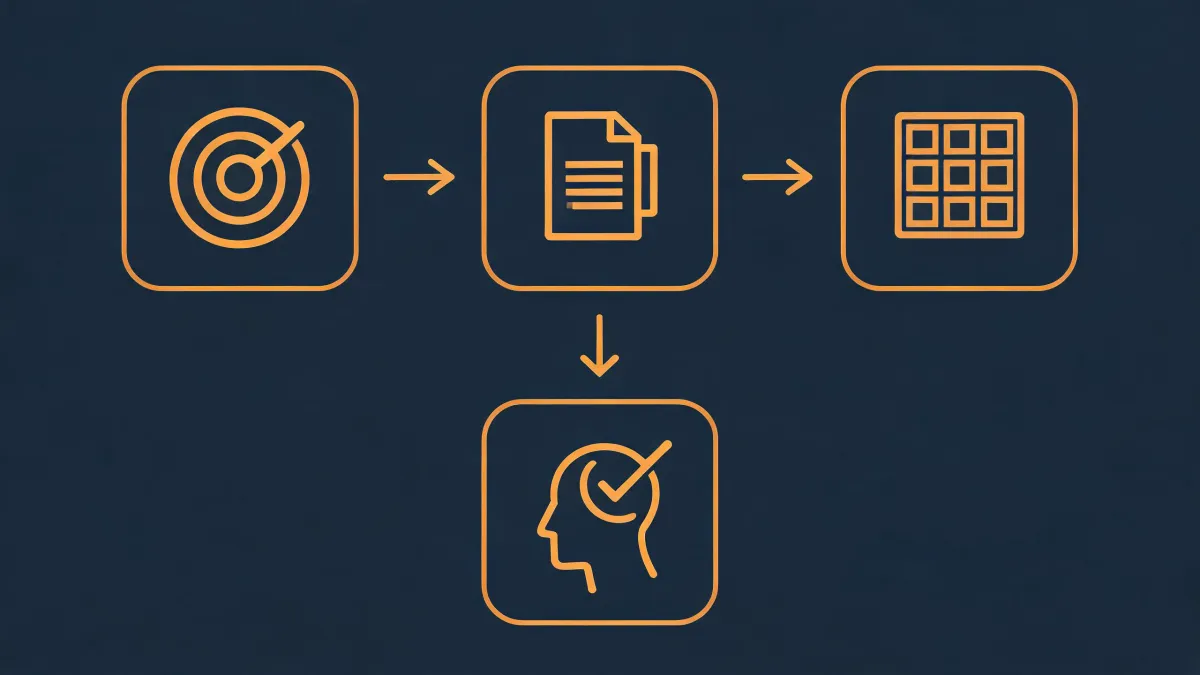
We rebuilt the process around an agent-native prospecting loop. Not because it sounds futuristic, but because the old linear process broke under deadline pressure. The new loop looked like this:
- Define ICP filters and exclusion rules.
- Pull from a company database with firmographics, tech signals, and recent intent data.
- Run waterfall enrichment, so missing fields get filled by multiple sources instead of one.
- Verify emails and flag risky ones for human review.
- Let AI sales agent features score and prioritize accounts.
- Human-in-the-loop review for top accounts and edge cases.
- Sync to the sequencer with owner assignment and suppression rules.
We used okkigo for this run. If you are reading an okki go review, you will see people arguing about credit pricing. That is a small part of the story. The bigger question is whether the tool fits into an agent-native workflow without constant duct tape.
The okki-go API integration was the part that mattered. We did not want to export CSV files at 2 AM and re-upload them into three different tools. We pushed ICP filters through the API, pulled enriched company records, ran verification, and returned the cleaned list to our sequencer. It was not magic. It was one less manual handoff.
What Actually Happened in the 36 Hours
By 1 AM, we had our first pass. The company database gave us 1,450 matching accounts. Waterfall enrichment filled in better firmographic and contact data for most of them. The professional email finder returned emails for 1,180 contacts. Verification marked 1,050 as usable and held 130 for manual review.
Not 100% accurate. I do not trust any tool that claims that. But we knew which ones were risky, and we did not send SDRs into a minefield.
The AI sales agent features also helped more than I expected. They did not write the campaign. They scored accounts by fit and intent signals, then pushed the top 200 to a human reviewer. That review caught a few bad fits, including two companies that had just announced layoffs in the target department.
We loaded the final list at 6:40 AM Thursday. The webinar went out on time. To be fair, we still had SDRs manually check the top accounts. We did not replace humans. We removed the dumb work.
The Result: No Guarantees, But a Cleaner System
I cannot promise reply rates. Anyone who guarantees reply rates is selling you a story. What I can say is that our SDRs spent their morning on accounts instead of cleaning spreadsheets. The sequencer did not bounce a wave of bad emails. The partner did not ask why our list looked like it was scraped from 2019.
We also tracked the total cost. The initial cheap option looked like $180 in credits. After manual cleanup, re-verification, and three hours of SDR time, it was closer to $900. The okkigo run cost more upfront, but it included enrichment, verification, intent, and API integration. The total cost was lower because we did not pay for the mess later.
That is total cost of ownership in prospecting. The invoice is not the cost. The cost is credits plus manual cleanup plus bounce risk plus SDR time plus missed deadlines plus rework. More often than not, the cheap option is expensive in cleanup.
What I Would Tell Someone Reading an Okki Go Review
Do not judge a prospecting platform by the sticker price of a credit. Judge it by how it fits into your workflow. I get why people focus on credits. To be fair, budgets are real. But the cheapest credit rarely wins the deadline.
Ask better questions:
- Does the company database have the fields your ICP actually needs?
- Can you use okki go API integration without building a custom ETL project?
- Do AI sales agent features score accounts, or just generate generic copy?
- Where does the professional email finder sit in the process? Is it a standalone lookup, or part of an enrichment and verification loop?
- How does the system handle human-in-the-loop review and suppression rules?
That last one matters more than most reviews admit. Agent-native prospecting does not mean no humans. It means agents handle the repetitive parts, and humans handle judgment calls.
The Boundary: This Was Our Context
This worked for us, but our situation was specific. We are a mid-market B2B SaaS company with a clean ICP, a dedicated RevOps person, and a sequencer that accepts API syncs. Your mileage may vary if you are a high-volume agency managing 50 clients or an enterprise team with rigid procurement and security reviews.
My experience is based on about 40 rush list builds, not thousands of enterprise campaigns. I cannot speak to how this applies to every region, industry, or compliance regime. If you are dealing with heavily regulated data, talk to your legal team first.
Under the CAN-SPAM Act, commercial emails need accurate header information, a clear opt-out, and a valid physical address. A better prospecting workflow does not excuse bad compliance.
The Lesson I Reuse
When a rush request hits, I do not ask which email finder is cheapest. I ask which workflow can produce a clean, verified, prioritized list without wrecking my team.
That is the real okki go review question. Not credits. Not feature checklists. Workflow fit.
The professional email finder is not the hero. The agent-native workflow is. The email finder just makes sure the agent is not knocking on fake doors.